
by Matthew C. Harrison
Luther described the natural propensity of all of us sinners to be “curved in on [ourselves].” Like Adam and Eve, we are created to be in a relationship with God, and a relationship with all others that reflects God’s love for us. We are created to live outside ourselves, living in God and tending His creation, oriented toward and thankful for others, open to others’ weaknesses and blessings.
Sin turns us inward, makes us self-justifying, self-centered, self-oriented, self-referential, self-theologizing, self-determining and jealous. We ever reference others in our lives according to the criterion of perceived personal benefit. Sin makes us manipulative, using others for our own advantage. Sin tells us we’re being ripped off when others around us are blessed. Sin makes us sure we deserve God’s favor and blessings and convinces us we’re being robbed if we don’t perceive them, especially when others prosper. Sin makes us live by comparison with others. Sin makes us arrogant. Sin makes us greedy. Sin causes us to look inward to find God and convinces us we can manipulate Him the same way we manipulate others. Perhaps worst of all, sin causes us to confuse our own thoughts, convictions and expectations with God Himself. I am self-made. I am self-referential. I am the master of my destiny. I am accountable to no god and to no creature. I am my god. Sin convinces us of all of this — all while, in reality, merely making us slaves to self.
Sin is a distortion of the truth and of all reality. It’s a parasite that inhabits all our being and thoughts and experiences, even though God created and intended all these for good. There’s not a positive reality it cannot and does not distort. Thankfulness for blessings morphs into self-centered hatred of others. If I’m humble, I immediately take pride in my humility. If I’m blessed, I take credit for my blessings.
Luther says this in the Smalcald Articles about sin: “This hereditary sin is such a deep corruption of nature that no reason can understand it. Rather, it must be believed from the revelation of Scripture” (SA III I 3). St. Paul had this profound and profoundly realistic understanding of sin. And he particularly realized from his own life that not even the Law of God was the remedy. In fact, knowledge of the Law (drawn from any religion or philosophy) only increases the problem!
What then shall we say? That the law is sin? By no means! Yet if it had not been for the law, I would not have known sin. For I would not have known what it is to covet if the law had not said, “You shall not covet.” But sin, seizing an opportunity through the commandment, produced in me all kinds of covetousness. For apart from the law, sin lies dead. I was once alive apart from the law, but when the commandment came, sin came alive and I died. The very commandment that promised life proved to be death to me. For sin, seizing an opportunity through the commandment, deceived me and through it killed me. So the law is holy, and the commandment is holy and righteous and good.
Did that which is good, then, bring death to me? By no means! It was sin, producing death in me through what is good, in order that sin might be shown to be sin, and through the commandment might become sinful beyond measure. For we know that the law is spiritual, but I am of the flesh, sold under sin. For I do not understand my own actions. For I do not do what I want, but I do the very thing I hate. Now if I do what I do not want, I agree with the law, that it is good. So now it is no longer I who do it, but sin that dwells within me. For I know that nothing good dwells in me, that is, in my flesh. For I have the desire to do what is right, but not the ability to carry it out. For I do not do the good I want, but the evil I do not want is what I keep on doing. Now if I do what I do not want, it is no longer I who do it, but sin that dwells within me.
So I find it to be a law that when I want to do right, evil lies close at hand. For I delight in the law of God, in my inner being, but I see in my members another law waging war against the law of my mind and making me captive to the law of sin that dwells in my members. Wretched man that I am! (Rom. 7:7–24)
We, like Paul — so far as God’s Law is concerned — are “dead while we live.”
But Paul continues: “Who will deliver me from this body of death? Thanks be to God through Jesus Christ our Lord!” (Rom. 7:24–25).
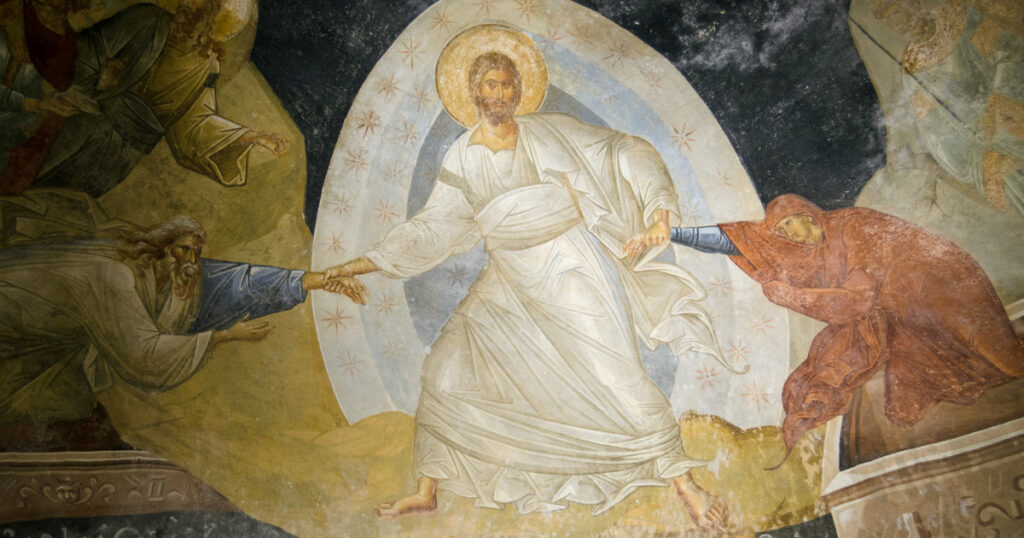
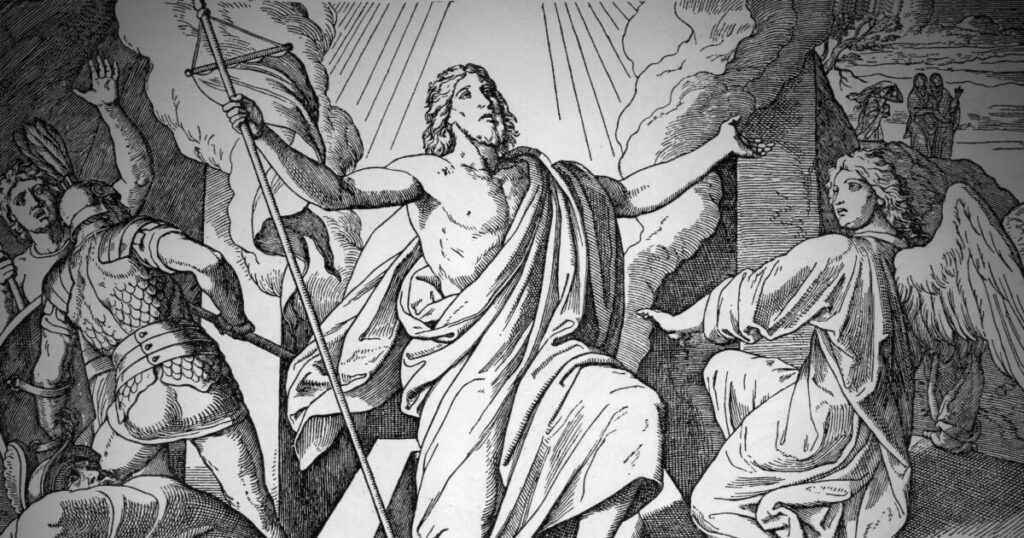
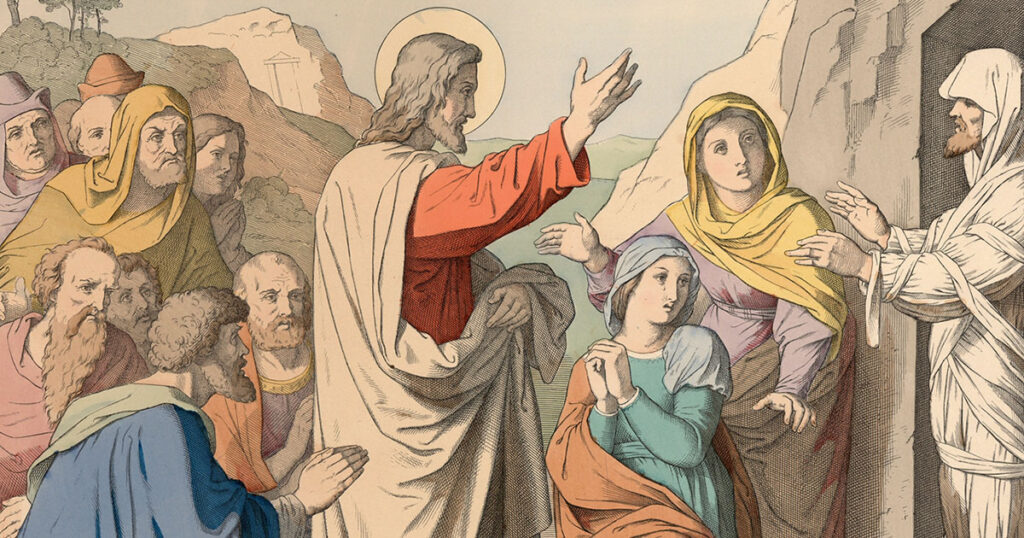
Our plight requires much more than self-revelation, self-consciousness or self-determination to go a different route. It requires a resurrection. It requires two resurrections, Christ’s and ours. We need more than a healing. We need life’s rescue from the grip of death. We need Christ and His life. We need Jesus speaking to us sinners who are bound and dead in a tomb of sin, the ultimate “curved in on ourselves”: “Lazarus, come out!”
This life, the only true life, is completely oriented outside ourselves: Christ justifies. Christ forgives. Christ frees. Christ lives for me and makes me alive. Christ lives outside Himself for me. Christ empowers and invites me to live outside myself in praise to God and out of love for my neighbor. “In Him was life, and the life was the light of men. The light shines in the darkness, and the darkness has not overcome it” (John 1:4–5).
That which was from the beginning, which we have heard, which we have seen with our eyes, which we looked upon and have touched with our hands, concerning the word of life — the life was made manifest, and we have seen it, and testify to it and proclaim to you the eternal life, which was with the Father and was made manifest to us — that which we have seen and heard we proclaim also to you, so that you too may have fellowship with us; and indeed our fellowship is with the Father and with His Son Jesus Christ. And we are writing these things so that our joy may be complete. (1 John 1:1–4)
In Christ,
—Pastor Matthew C. Harrison
This article originally appeared in print in the April 2026 issue of The Lutheran Witness.