
by Matthew C. Harrison
“Thank God, a seven-year-old child knows what the Church is, namely, the holy believers and lambs who hear the voice of their Shepherd” (SA III XII). The Word of God constitutes the church, according to Dr. Luther. “For God’s Word cannot be without God’s people; and vice versa; God’s people cannot be without God’s Word” (WA 50:629). Our great Augsburg Confession, in Article IV on Justification, clearly states, “Our churches teach that people cannot be justified before God by their own strength, merits, or works. People are freely justified for Christ’s sake, through faith, when they believe that they are received into favor and that their sins are forgiven for Christ’s sake. By His death, Christ made satisfaction for our sins. God counts this faith for righteousness in His sight (Romans 3 and 4).”
Then Article V follows, immediately stating how this faith comes about: “So that we may obtain this faith, God has instituted the preaching office to give us Gospel and Sacrament, through which He gives the Holy Spirit as through means” (my literal translation of the original). Lots of ink was spilled in years past over the question of whether God instituted the pastoral ministry as a function or as an office. It’s both. The Office of the Ministry exists for the functions of the ministry — delivery of the Word of Law and Gospel for the creation of faith. Justification by faith happens when the Word of God hits a person’s ears and creates faith. “Faith comes from hearing, and hearing through the word of Christ” (Rom. 10:17). It also happens in Baptism, which St. Paul teaches is justification (Titus 3:5ff). “How shall they hear without a preacher?” (Rom. 10:14 NKJV). The Bible teaches that this Word of the Gospel must be proclaimed, and such proclamation creates faith.
Martin Luther and our Lutheran Confessions recognize that there are two very significant aspects of the office of the pastor. One is from above, and the other is from below. First, the “from above”: The pastoral office is a divine institution. It is not optional in the church. Luther taught over and over again that when the pastor is delivering God’s Word and Sacraments, his feet are Christ’s feet, his lips are Christ’s lips, his hands are Christ’s hands. “He who hears you hears Me” (Luke 10:16 NKJV). As a legitimately called pastor, the pastor stands “in the stead and by the command of Christ.” This holds so far as the pastor is doing what his ordination vows hold him responsible for. It doesn’t hold if he’s gassing off and making rules about stuff that’s not in the Bible, catechism or our Lutheran Confessions. Insofar as the pastor speaks God’s very Word (squarely from the Bible), we are to listen and act accordingly. “Obey your leaders and submit to them, for they are keeping watch over your souls, as those who will have to give an account. Let them do this with joy and not with groaning, for that would be of no advantage to you” (Heb. 13:17).
But there is also a “from below” aspect to the Office of the Ministry. This office presupposes the priesthood of the baptized. Every Christian, every man, woman and child, possesses the Word of God. All of us — and Luther was prolific in making this point — are to offer the sacrifice of praise to God, the fruit of lips that praise His name; to offer prayer to God for our neighbor; to offer the sacrifice of works of love and mercy; and to use our vocations to serve others. The priesthood is a spiritual estate belonging to all Christians. All baptized Christians possess the Keys, that is, the fundamental right and responsibility to speak the Word of God in our vocations, even to absolve those in our family and forgive their sins.
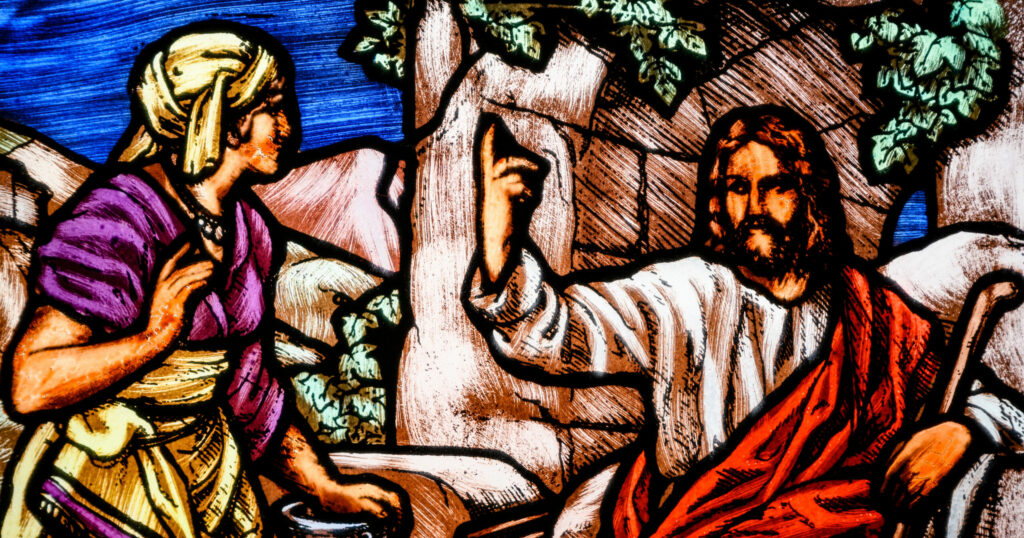
Luther asserted this very thing repeatedly: “He who is a Christian has Christ, and whoever has Christ has all things that are His” (WA 6:567). After noting in the Smalcald Articles (III IV 1) that “God is superabundantly generous in His grace,” Luther mentions that the Gospel comes via Word, Sacrament and “Power of the Keys,” and “also through the mutual conversation and consolation of brethren, ‘Where two or three are gathered’ (Matt. 18:20) and other such verses.” I’m reminded of the story of the woman at the well in John’s Gospel. “Many Samaritans … believed in Him because of the woman’s testimony” (John 4:39). She had the right and freedom to speak to her friends, and her speaking of Christ caused faith. So do you, and nowhere more vitally than within your own families and homes.
Luther and our Augsburg Confession Article XIV also assert that “no one should publicly teach in the Church, or administer the Sacraments, without a rightly ordered call.” No one has the right to put him or herself forward and just begin blathering in the assembled church. That’s disorderly and has often been spiritually damaging. That’s why Paul says, “Let all things be done decently and in order” (1 Cor. 14:40 NKJV). In order for one to serve Christians as a pastor, he must be called by that community to do so. Ordination confirms that call and provides the demonstrable approval of the entire church. In our Synod’s order, district presidents authorize any and all ordinations for the well-being of the church. This helps to ensure that the man is “apt to teach” and is morally upright so as not to offend and inhibit the Gospel.
The Lutheran doctrine of the pastoral office is not meritorious, meaning that being a pastor does not make a man holier than anyone else. Nor does a pastor in any way earn himself eternal life (or less time in “purgatory”). The office of the pastor is not hierarchical, either: There is no divine mandate for a pope, nor does any divine mandate require a hierarchy of clergy. A pastor is not part of a hierarchy over his people. “Grades” of responsibility or offices are of human arrangement for the well-being of the church. Lastly, the office is not legalistic. A pastor has no role in helping Christians “earn heaven” or legalistically binding them to rules not based on Holy Scripture. A pastor delivers the Word of Christ and lovingly shepherds God’s people. It is an act of humble service.
Thank you for loving your pastor. Thank you for caring for him and his family. Even small things mean the world to him. Tell him you appreciate his work, his pastoral care, his preaching. Don’t wait until he’s headed to another place. The greatest gift you can give your pastor is the faithful reception of the Gospel he delivers, so much so that you, like the woman at the well, tell others about Jesus and invite them to church. “Come, see a man who told me all that I ever did. Could this be the Christ?” (John 4:29).
In Christ,
–Pastor Matthew C. Harrison