


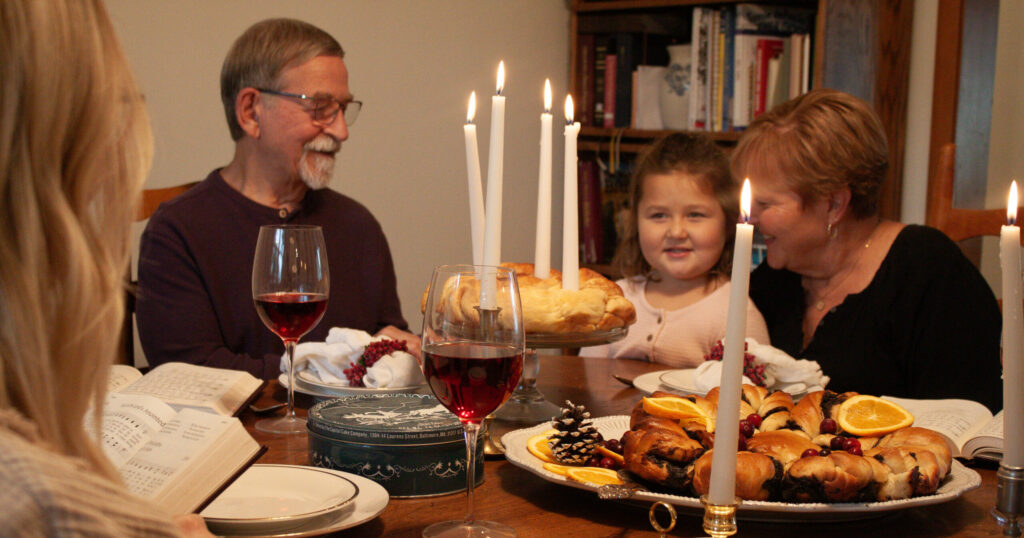
This is the latest installment of “Life in the Church Year,” a series by Dr. Kristen Einertson and Tessa Muench of All the Household. This series will provide guidance for living out the seasons of the Church Year at home with your families. Find month-by-month lists of Lutheran feasts, festivals and commemorations here.
The liturgical year is a wonderful gift. Through it, our churches and our lives are entwined with Christ in time, as we observe His nativity, passion, death, resurrection and ascension. As we move through the Church Year, our lives confess the Creed through the day, the week and the year, and we find that these seasons deepen our communion with Christ’s saints from various times and places and help us pass down of the gift of faith to the next generation.
Over the length of a human life, the feasts, fasts and festivals of the Church Year begin to form a pattern. The truism “you are what you repeatedly do” gets at the heart of what it means to live with this liturgical mindset and gives us a reason to embrace the habits and piety that mark a people living in Christ. If you are participating in the Divine Service, you are already deeply involved in liturgical living — as you go weekly to receive absolution, encounter the revelation of God, and partake of our Lord’s body and blood.
Yet the Christian life is not confined to the church building. Throughout the week, the Christian home is the place where many of us engage in Scripture reading, sing hymns, repent and forgive. It is here that our lives are simultaneously full of laughter, joy, sorrow and tears. By living our lives in concert with the church’s year, we learn to make sense of these seemingly contradictory experiences and better understand the Christian reality that we live. Through her calendar, the church provides times of fasting and denial, ordained for bodily and spiritual growth, as well as times of feasting and celebration, which offer a foretaste of the joyful heavenly life to come. The question becomes, then: How can we better live out our lives of faith and bring the teachings of Christianity into our Lutheran homes throughout the year? Over this year’s issues of The Lutheran Witness, we are excited to explore these topics in greater depth, and we hope you will journey with us.
One thing is certain when you live in this Lutheran and liturgical way: You will realize that the Church Year is anything but dull. It is always teaching, tending and retraining us for salvation and sanctification. The feasts and commemorations of the church are not simply “special days” given to us to break up the monotony of ordinary life. Rather, they are moments when the veil of the temporal world is lifted and that which is truer-than-true meets us face to face: the Lord Jesus is now ascended, now with us in the present moment, and ministers to us now — just as He always has — here on this earth.
The Church Year and Christian Leisure
The Church Year is a constant reminder that God meets us in time. And this reveals why leisure is both necessary and holy. While our culture treats leisure as the absence of work, a break from productivity or an indulgence earned by effort, the Christian understanding of leisure is different. True leisure is not idleness or entertainment, but participation in the rest that God Himself ordained. “Remember the Sabbath day, to keep it holy,” He instructs us (Ex. 20:8). In this commandment, God does not merely tell us to stop working; He invites us to enter His rest. Just as God rested after His work of creation, we, too, are called to rest in His completed work of redemption. Leisure, then, is not in opposition to labor but is what gives our labor meaning —
it reorients our activity toward what is eternally true.
The Church Year, then, provides a form and rhythm through which rest and celebration can take on a true Christian flavor. If we allow it, every season of the liturgical cycle teaches us how to receive time as a gift given to us by God. By living in tandem with this calendar, we are encouraged to use our time to intentionally rest and bask in the joys of Christ, knowing that He is the one who has redeemed our time and celebrating this good news with everyone we know.
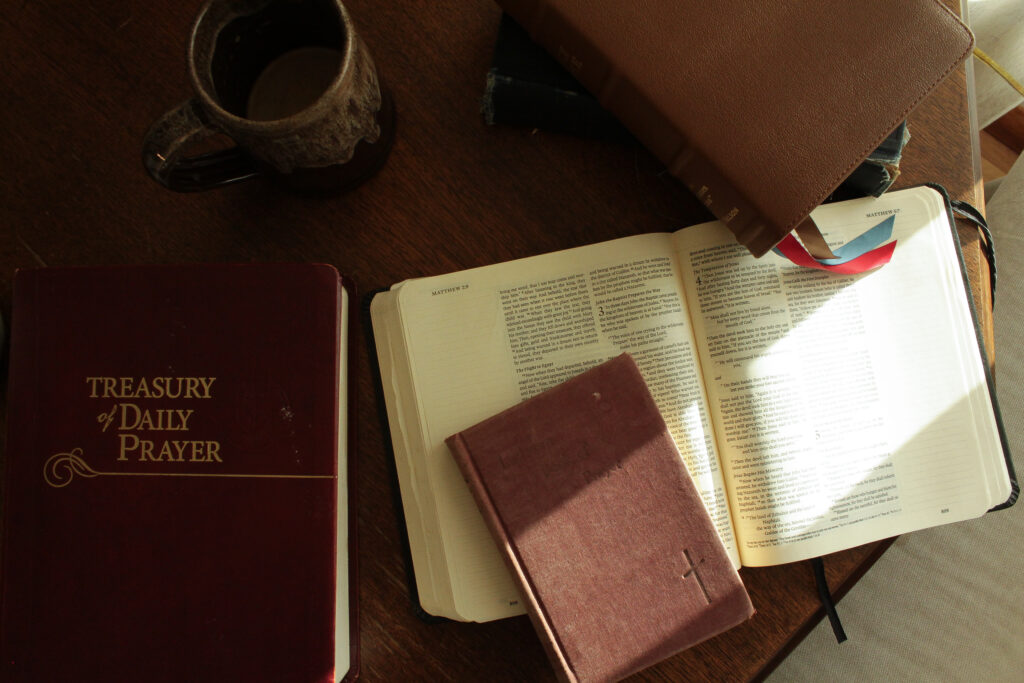
Leisure Through a Twelfth Night Feast
As you reflect upon the leisure that our Lord gives this month, consider celebrating the Twelfth Night of Christmas on Jan. 5. Across Christendom, this evening marking the last of the Twelve Days of Christmas and the night before the light of Epiphany is a wonderful occasion set aside for Christian joy and revelry. The customs that accompany its commemoration are all meant to help us reflect upon the joy that our God has come to dwell among us and makes Himself and His divinity known.
Gather your family and friends to celebrate, put on a rich meal, sing a few carols, light candles marking the coming of Jesus’ light, and read the story of the Wise Men. To follow Christian tradition, consider serving a King Cake baked with a baby Jesus figurine or bean hidden inside, recalling the joy and surprise of the Gospel itself — a King who hides Himself in humility amongst humankind. Other customs called for on this day include drinking spiced wassail, partaking in a house blessing, and the associated chalking of the door.
In celebrating such a feast, the Christian home bears witness to the truth that leisure naturally accompanies the joy that we’ve gained in Christ. A Twelfth Night feast can, in this way, serve as a small act of resistance to the world’s ceaseless hurry and remind us that Christian leisure serves as a confession of the levity of our communion with God. In this way, the Church Year forms us not only to work faithfully but also to feast faithfully, our homes becoming the places where Christians can learn to live, labor and rest in the presence of our Lord.
Twelfth Night Party Checklist
- King Cake: a sweet crown for the Christ Child, celebrating His kingship and the joy of His manifestation to the nations.
- Star bread: to remember the Star of Bethlehem that led the Magi to Christ, the light of the world.
- Citrus fruit: signs of light and abundance, echoing the brightness of revelation.
- Spiced wassail: a toast of gladness marking the close of Christmas, the beginning of Epiphany and the warmth of fellowship in Christ.
- Candles: to symbolize the light that shines in the darkness and will not be overcome.
- Chalk: for chalking the door with the Epiphany blessing, marking your home with Christ’s name and inviting His presence for the year ahead.
- Incense: recalling the Magi’s gift of frankincense and symbolizing prayers rising to heaven.
Cover image: Tessa Muench


I’m a recreational therapist and pastor’s wife in the LCMS and enjoyed seeing the connection of leisure and God’s word. Although this article merely scratched the surface regarding what leisure is and is not, this is something meaningful to all and often requires additional thought, attention, and education to assist with increasing opportunities to connect with what is important to us most and with whom we connect. Leisure is intrinsic, personal, and holistic with how it benefits us. There should be more discussion regarding this and would love to connect!