

This is the latest installment of “Life in the Church Year,” a series by Dr. Kristen Einertson and Tessa Muench of All the Household. This series will provide guidance for living out the seasons of the Church Year at home with your families. Find month-by-month lists of Lutheran feasts, festivals and commemorations here.
One of the ways that the Church Year encourages Christians in their faith is through the rich opportunities for prayer that accompany it. The prayers that structure the liturgical year serve as a stable guide for life with the church and unite us to fellow Christians across time and place. One great beauty of approaching prayer in this way, as a corporate and shared activity, is that it marks the church’s seasons while also shaping the weeks, days and ordinary moments of a Christian’s life. Prayer is a steady and orienting element in our life as Christians that not only occurs within the Divine Service on Sunday mornings but also continues at our kitchen tables, in nurseries, hospital rooms and quiet corners of a house, sanctifying that which “is received with thanksgiving” as each place and moment are “made holy by the word of God and prayer” (1 Tim. 4:4–5).
The Church’s Prayer as Our Prayer
Whether we are in Advent or Lent, Christmas or Easter, Epiphany or Trinitytide, or transitioning between these signposts, the church is vigilant in prayer. One of the defining characteristics of the church is that her members pray together, uniting their hearts and voices in concordia (harmony) and faith, trusting that their petitions rise before God like incense (Psalm 141:2). The Christian never prays alone. When we sleep, our brothers and sisters across the world lift their prayers; when they rest, we take up the same petitions. This continual rhythm of wakefulness and watchfulness is a beautiful image that the church has reflected upon the past few months as we’ve moved through Advent, Christmas, Epiphany and now into Lent.
As we enter this penitential season, the church calls us to repentance, self-examination and renewed attention to God’s Word. Lent places prayer at the center of Christian life, inviting us to strengthen this practice so that we are focused more steadily upon Christ and His cross. The season directs our gaze toward the suffering and death of Christ, teaching us to see our own lives through the pattern of His humility and obedience. It also helps us better understand the story of salvation and the faithful way the church has articulated and handed down her theology.
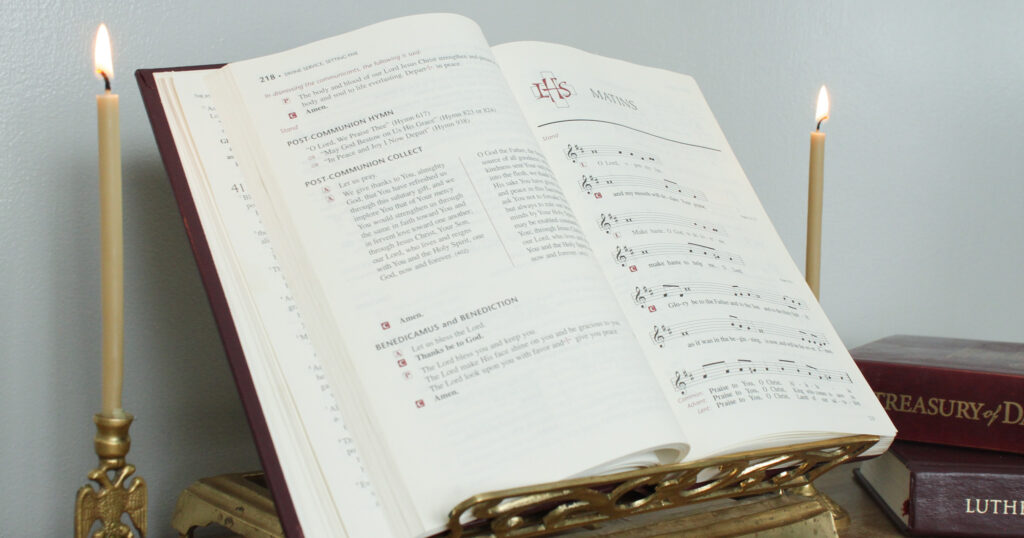
One of the most accessible tools for deepening prayer during Lent is the church’s collects, or the brief prayers derived from Scripture that accompany the Church Year. Like the Psalms, these public prayers give Christians language suited for every circumstance in life. Through joy and sorrow, fear and relief, the collects orient our attention toward the lessons the church teaches. An excellent resource for this is CPH’s Treasury of Daily Prayer, which features daily collects as well as Scripture and devotional readings. You can also find collects for Sundays and many feast days at lcms.org/worship/prayers.
Yet even with these tools, taking up a more concentrated habit of prayer during Lent or at any time of the year can be difficult. It isn’t that we don’t desire to pray; the challenge often lies in establishing a routine amid the demands of daily life. One helpful practice to consider is setting aside a designated place within the home to gently prompt a return to prayer. Such a place reminds us that the cultivation of faith is not limited to the four walls of the church building but extends into the ordinary spaces of daily life.
The Lutheran Home Altar
A home altar can serve as an encouragement to prayer and make a meaningful impact on the devotional habits of a household. Just as homes have a dining table for eating, a kitchen for cooking and bedrooms for sleeping, the home altar becomes a place for praying. Of course, establishing such a space does not restrict prayer to that location, but it does ensure that prayer has a recognizable location within the rhythm of daily life.
A home altar becomes the “heart” of a family’s prayer life because it provides an atmosphere suited to devotion. Distractions are minimized; Scripture can be easily referenced; and simple sensory cues such as a crucifix, candles, incense and quietness help draw the mind toward Christ and His promises. Here are three brief examples of how a home altar might appear in different homes.
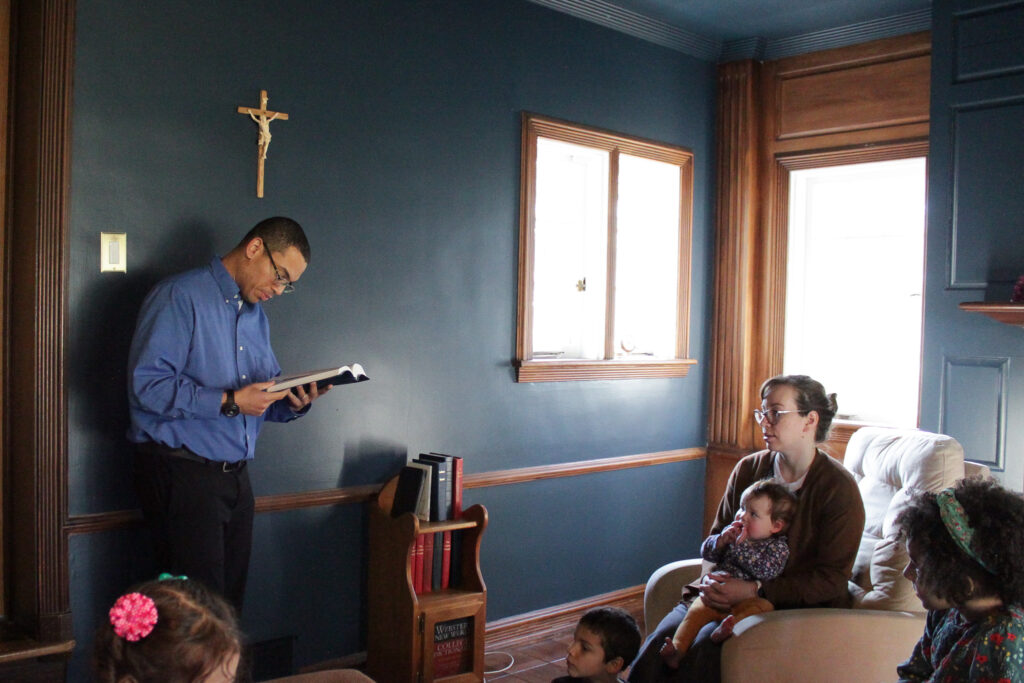
In a family’s living room, a small two-tiered shelf holds several hymnals. A white cloth covers the top with a Bible and two candles resting upon it. A simple crucifix hangs above. The area is modest and unobtrusive, yet each evening the father lights the candles and leads his family in Evening Prayer from Lutheran Service Book, followed by hymns such as “Now Rest beneath Night’s Shadow” and “O Gladsome Light, O Grace.”
In another home, a widow sits at her kitchen table. Although the table once held many children, it now holds a Bible, a hymnal and a list of family names tucked between the pages. Each morning she prays Matins, remembering her children, children-in-law, grandchildren and great-grandchildren in turn. An icon of the Lord’s Supper hangs nearby, reminding her that when she prays the Lord’s Prayer, she imitates Christ in His instruction to call upon our Father with confidence and trust.
In a college dorm room, the “home” altar consists of a crucifix gifted for a baptismal birthday that hangs above a student’s desk. A small piece of Christian art and a pair of battery-powered candles make the space conducive to prayer and occasionally prompt conversations with friends who visit.
In all these cases, the Lutheran home altar serves as a space that invites Christians to attend to the gift and duty of prayer. While a home altar is not necessary, it is delightful, practical and pedagogical. It turns our eyes toward Christ and teaches the household that prayer is an essential part of the Christian life.
Home Altar Suggestions
- The crucifix: Front and center should be a crucifix. While we do not worship images, the crucifix directs our attention to Christ’s saving work. The crucifix allows the Christian to contemplate the redemption won through Jesus’ suffering and death.
- Devotional tools: A Bible is certainly the most important book to have at your altar. However, the hymnal and other breviaries are also valuable to provide psalms, canticles, prayers and readings that support the discipline of daily prayer.
- Candles: These offer visual focus and signal that the household is entering a time set apart for prayer.
- Incense: This serves as a sensory reminder of Psalm 141.
- Christian artwork: Icons, paintings or Lutheran art prints help fix the eyes on Christ and the saints who have gone before us, reinforcing the communal nature of prayer.
- A designated location: A home altar does not limit prayer to one place; rather, it creates a visible reminder that the household is called to a life of prayer.
Cover image: Tessa Muench