

This is the latest installment of “Life in the Church Year,” a series by Dr. Kristen Einertson and Tessa Muench of All the Household. This series provides guidance for living out the seasons of the Church Year at home with your families. Find month-by-month lists of Lutheran feasts, festivals and commemorations here.
Music is central to our shared life. Plato argued in his Republic that music education is essential to good societies because rhythm and harmony shape the soul and instill foundational values. Centuries later, in his Confessions, St. Augustine reflected on the music of the church, recalling how he was moved “not by the singing but by what is sung.” And Martin Luther, writing a thousand years after Augustine, famously stated, “Next to the Word of God, music deserves the highest praise.” Across time and place, great philosophers and theologians alike have recognized the powerful role music plays in our spiritual life.
Music does so much more than merely entertain and give us pleasure. It shapes our tastes and sensibilities; moves our affections; and trains our ears to recognize what is good, true and beautiful. It also helps us learn and remember. A melody heard years ago can return us to a particular moment, carrying its words along with it and lodging them in our memories in ways ordinary speech often cannot.
It should come as no surprise, then, that the church across a multitude of times and places has strategically used God’s gift of music to help Christians meditate upon Scripture. What is uniquely special about our own Lutheran heritage is how this striking combination of Word and music became one of the great vehicles of Reformation teaching. The doctrine proclaimed from Lutheran pulpits was echoed in song by the lips of the people. Through hymns, Christians could sing the Gospel, learn it by heart and carry it with them long after they left the Divine Service. More than 500 years later, the hymns they wrote — and many others composed since — remain ours to take up in song and pass on to another generation.
Singing Theology
Luther recognized music’s remarkable ability to help Christians confess the faith, and the rich hymnody of the Reformation transformed the words of Scripture and the teachings of the faith into memorable notes. Themes such as justification by grace through faith, Christ’s victory over sin and death, the comfort of Baptism, the gift of the Sacrament and the promises of God in the midst of suffering became ingrained in the hearts of Christians.
Consider Luther’s own “Dear Christians, One and All, Rejoice” (LSB 556). Its stanzas are not just about Christian joy; they rehearse the story of salvation, moving from humanity’s bondage to sin to the Father’s mercy and Christ’s saving work. Likewise, “From Depths of Woe I Cry to Thee” (LSB 607), Luther’s rendering of Psalm 130, places the language of Scripture into a form that Christians can remember and carry with them.
Over years of worship, the church builds within her people a treasury of words and melodies that may remain for decades. A child who cannot yet explain the doctrine of the incarnation may nevertheless sing “veiled in flesh the Godhead see” (LSB 380:2), even if he only later begins to contemplate the depth of that mystery. A Christian approaching death may suddenly find that words learned years earlier return with new meaning: “Hold Thou Thy cross before my closing eyes” (LSB 878:6). The hymn first learned in ordinary circumstances becomes a confession ready to be uttered throughout the journey of life.
Hymnody for the Everyday
For this reason, hymns are not meant merely to be sung on Sunday morning. They belong to the everyday lives of Christians, as they experience thanksgiving, celebration, suffering, grief and all the ordinary moments in between. Families might sing while getting ready for bed, driving in the car or working in the garden. Hymns that feature repetition, such as “Triune God, Be Thou Our Stay” (LSB 505) or “Christ Is Arisen” (LSB 459), can be especially easy to learn, as the repeated words come readily to mind.
Hymns can also accompany life’s more difficult moments by giving us words when our own are inadequate. “What God Ordains Is Always Good” (LSB 760) confesses God’s faithfulness even when His purposes remain hidden from us. Paul Gerhardt’s “Why Should Cross and Trial Grieve Me” (LSB 756) gives Christians words with which to confront suffering in the confidence of Christ’s victory. The great treasury of Lutheran hymnody offers words for all circumstances.
The Church Year can even guide us in deciding what to sing. Just as congregations sing hymns chosen in connection with each Sunday’s readings and themes, we can extend that practice into the home. Bring home the Sunday bulletin and choose one hymn to continue singing throughout the week. Or select a hymn for an entire season — an Advent hymn in December, a Lenten hymn before Easter or a Pentecost hymn as the church celebrates the coming of the Holy Spirit. To memorize them, begin with one stanza, sing it regularly until it becomes familiar and then add another.
A Seasonal Example
October gives us an especially fitting opportunity to put this into practice. As the long Trinity/Pentecost season moves toward its conclusion, the church turns our attention toward perseverance, Christ’s return and His enduring church. Then, on Oct. 31, Lutherans commemorate the Reformation — a particularly appropriate occasion to remember through song.
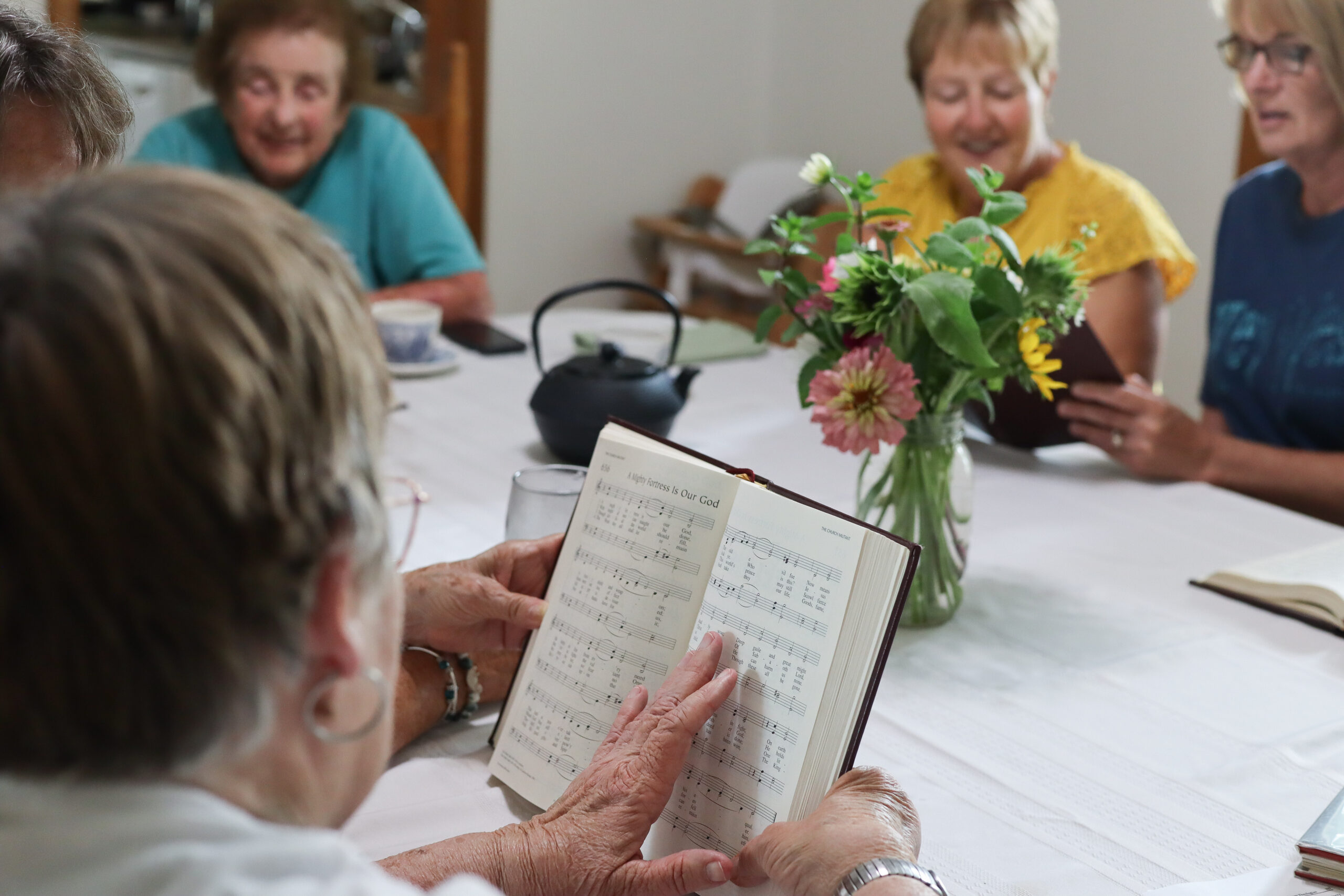
Consider choosing one Reformation hymn to make your own this month. “A Mighty Fortress Is Our God” (LSB 656/657) may be the most obvious choice, but it’s not your only option. Sing “Salvation unto Us Has Come” (LSB 555) and hear Law and Gospel unfold across its stanzas. Learn “Lord, Keep Us Steadfast in Your Word” (LSB 655) as a prayer for Christ’s church. Or choose one of Luther’s catechism hymns, such as “Our Father, Who from Heaven Above” (LSB 766), and use the music to help place the teachings of the faith into your memory.
To dive in deeper, read the words before singing them and look up the Scripture passages they reference. Ask children which words they recognize from Scripture or the Divine Service. Listen with intention — not only to hymns but also to other worthwhile and theological music (think chorales, Bach cantatas or musical settings of the Psalms and other portions of Scripture).
Consider what each piece asks you to love, lament, celebrate or desire. Rather than asking “Do I like this?” ask yourself instead: “What is this teaching me to hear?” As you bring music more intentionally into your life in the Church Year, use the questions below to guide your listening and singing.
For month-by-month lists of Lutheran feasts, festivals and commemorations, visit lcms.org/worship/church-year.
Questions for Listening and Comprehension
- What understanding of God, humanity, love, suffering or the good life does this piece communicate?
- If this is a hymn, what biblical passages, doctrines or promises does it teach? Where are they found in Scripture?
- How does the music itself — its melody, harmony, rhythm and character — serve the words being sung?
- How does this hymn or piece connect to the Church Year, the Divine Service or a particular season of Christian life?
- If I were singing or listening to this with a child, what might I want to help them notice?
- How might this music shape my prayers, my affections or my confession of faith?
This article originally appeared in the October 2026 print edition of The Lutheran Witness.

Cover image and photo: Tessa Muench