
When we read the book of Acts, we see how the powerful Gospel spread and how, by it, the Lord of the church was building His church just as He promised He would do. Churches sprang up in all kinds of areas in the first century. Early Christians planted churches in small towns, as Lystra and Derbe likely were. But they also planted churches in the major metropolitan areas of the day: Antioch, Ephesus, Corinth and Rome itself. The powerful Word of God went forth to seek and to save the lost masses of people wherever they were.
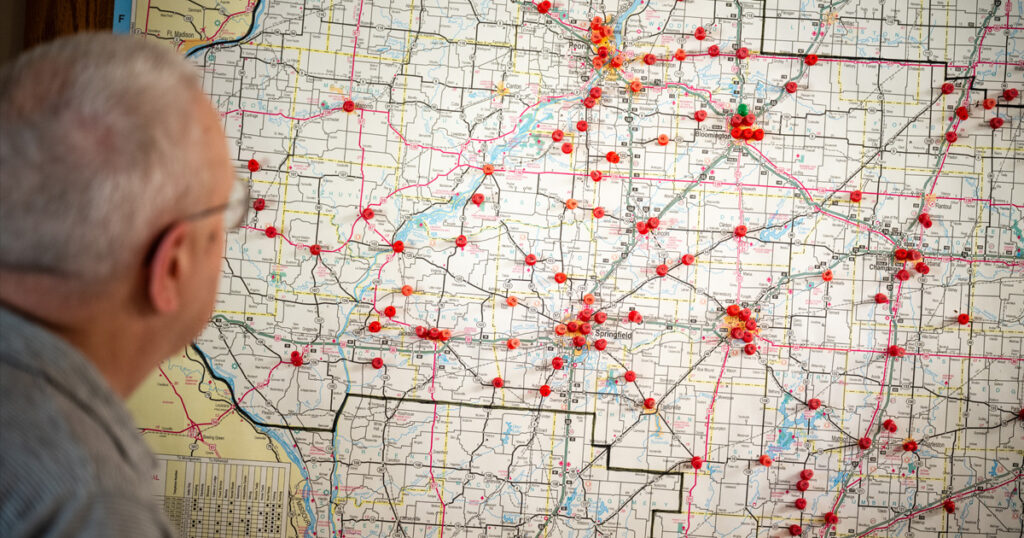
We in the Missouri Synod, as heirs of this remarkable legacy, now need to ask in a serious way: How do we, like those early Christians, keep up with the changing map of the country? How do we bring orthodox Christianity to the masses of people in this country where they now live?
The vast majority of Missouri Synod’s churches and schools are in the middle of the country. We have two districts each in Iowa, Minnesota and Wisconsin and three districts in Illinois. I remember driving through South Dakota — a beautiful state — and noticing how every town had a sign for a Missouri Synod church. Many, if not most, of the Synod’s historic churches and schools are located in small towns and in rural areas, especially those in the Midwest and Great Plains regions.
There is nothing negative about any of this. We give thanks to the Lord of the church for building His church in these areas. Yet the challenge facing us today is the map of the country. Half of the country’s population now lives in crowded urban areas, most of which are outside of the LCMS’s traditional stomping grounds in Middle America.
So, what does this mean? It means that the circuits and districts and congregations and schools and RSOs of the Missouri Synod should be planning to start hundreds of new initiatives — new churches, schools, preschools, youth leagues, you name it — in the places where masses of people live: cities like New York, Los Angeles, Chicago, Phoenix (currently the fourth largest metro in the country), Houston, Baltimore, Philadelphia, Miami, Atlanta, Dallas–Fort Worth, Albuquerque, Las Vegas, San Diego, San Francisco, Oakland, Des Moines, Omaha, Cleveland, Detroit … and the list goes on.
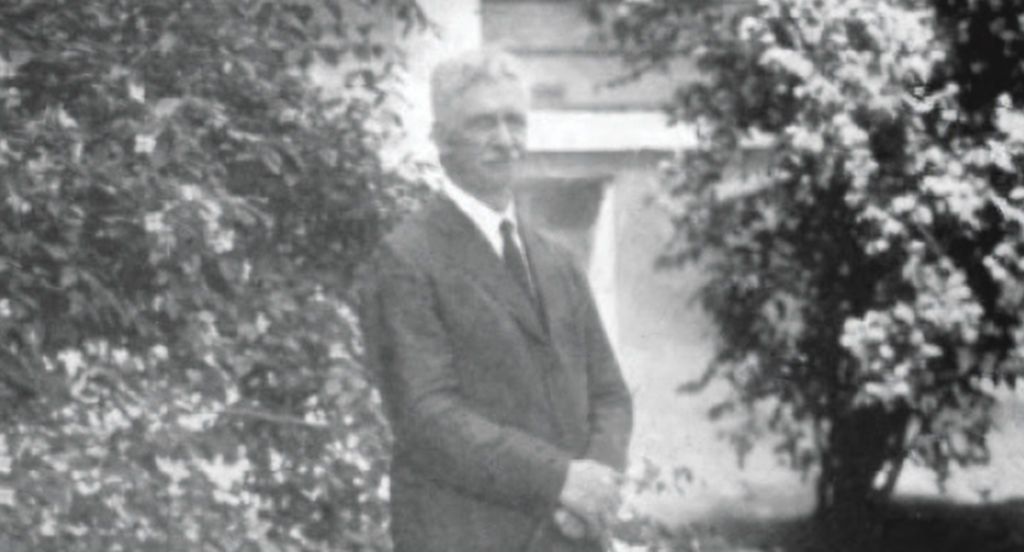
Today’s church planters and expanders can find inspiration in the expansionistic zeal of the previous generation. For example, my father was a mission planter. He started 54 new churches in South Wisconsin and 37 new churches in Colorado, Utah and New Mexico. He was always looking at maps. Folks used to say that you can’t work in Utah because it’s Mormon country, but he said that the Word of God is stronger than Mormonism. He knew, too, that for the church to expand its gospel footprint, the laypeople would have to be mobilized. The clergy could not do all the work. So, he started a program to empower laypeople for this work. And he was not alone. His generation was full of Lutherans just like him: people with gospel zeal and expansionistic fire in their bellies.
Like my father in Utah, we must never allow ourselves to underestimate the causative power of the Word of God. We need to remind ourselves that orthodox Lutheranism is simply orthodox Christianity — the pure Gospel; Baptism and the Lord’s Supper and Confession and Absolution, taught and administered according to Christ’s mandate and institution; the Scriptures taught in their truth and purity; and the ecumenical creeds. The Word of God exercises causative power to lead sinners to repentance and faith. The Holy Spirit, through the Word, can make orthodox Christians out of all manner of people in this country regardless of where they live.
It is time to play offense with our theology as we work together to spread orthodox, biblical, confessional theology in a country where all kinds of religious voices are spouting nonsense and people are being tossed to-and-fro by every wind of religious ideas and movements.
To do so, we must go to the masses of people where they live, which, in our present day, means urban areas, especially on the two coasts, in the Mountain West, and in the Sun Belt. Tennessee and both Carolinas are currently among the fastest growing states in the country. Our mission is to spread orthodox Christianity, not some kind of heterodoxy or distortion, to every corner of the world. We should always be intentionally making aggressive plans to expand. And “we” means all of us. The clergy cannot do all the work. Laypeople also need to step up and bring their innovative and entrepreneurial abilities to the effort.
Why are there so many established LCMS churches in the small towns of Middle America? Because once upon a time, those areas were epicenters for migration, where large influxes of people arrived in search of land, jobs and other economic opportunities. Now, many of those once-vibrant population centers have essentially emptied out. The people have gone elsewhere. The most fertile mission fields are no longer where they once were. We need fresh thinking about expanding today.
Do we have the zeal and courage to do as our fathers did? Do we have the shrewdness to take a good look at our country’s changing map and plant our churches and start new initiatives in the “highways and the hedges” (Luke 14:23) — and in our nation’s expanding urban centers — that God’s house may be filled?