
By Andrew Steinmann
Read Exodus 40:1–2, 9–15; 1 Samuel 16:1–13; and John 12:1–8.
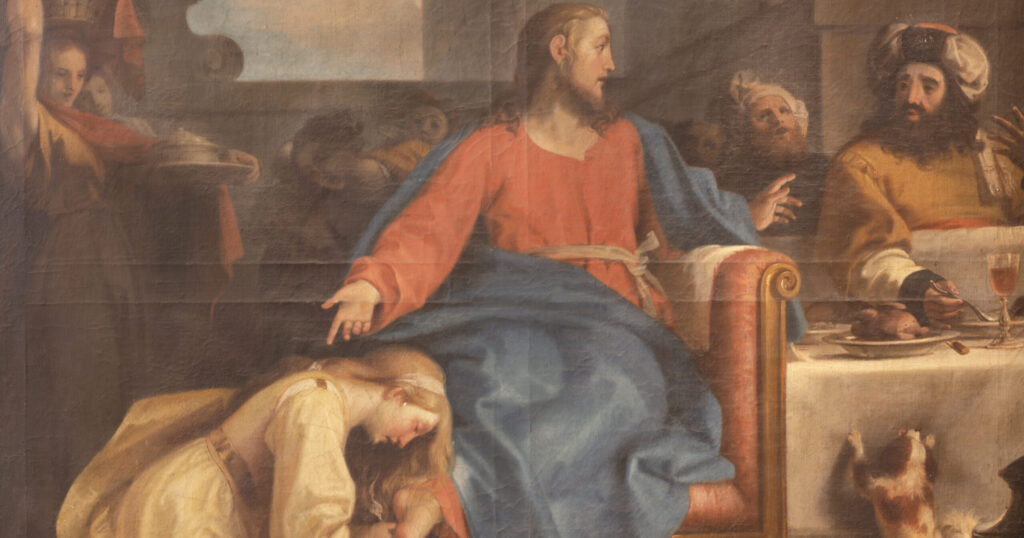
John tells us that on Saturday — six days before the Passover and Jesus’ crucifixion — Mary, the sister of Martha and Lazarus, anointed Jesus’ feet with expensive oil. Although Judas objected to what he considered a waste of an expensive commodity, Jesus noted that she had kept it for the day of His burial. Jesus was pointing to His coming death on the cross, which He had foretold several times (Matt. 16:21; 20:18; Mark 8:31; 10:33; Luke 9:22). While the disciples may have been slow to understand this, it appears as if Mary took Jesus’ words seriously. But is that all there was to Jesus’ anointing on that evening?
Jesus is presented in the Gospels as the “Christ,” which means “anointed one.” In the Old Testament, anointing was used to induct persons into important offices. Israel’s high priest was anointed when he assumed his office (Ex. 40:13; Lev. 6:22; 16:32; 21:10; Num. 4:16; 35:25). This rite became so closely associated with the office that the high priest was called “the anointed priest” (Lev. 4:3, 5, 16). Mary’s anointing pointed to Jesus as the great High Priest who would not only offer the sacrifice that would pay for the sins of the world but also serve as the sacrifice itself (Heb. 7:11–8:6).
Jesus also was the great Prophet. While the Old Testament does not often depict prophets as being anointed into their office, it does mention that the prophet Elijah was to anoint Elisha to be his successor. Already because of Jesus’ teaching and miracles, some people had recognized Him as a prophet (John 6:14; 7:40; 9:17). Throughout Holy Week, Jesus would show Himself all the more to be a prophet as He taught God’s Word — in Jerusalem’s temple, to His disciples on the Mount of Olives, and even from the cross, when He declared His work of atoning for the sins of the word to be finished (John 19:30).
But perhaps the best-known anointing rite was that reserved for Israel’s kings. Samuel anointed Israel’s first king, Saul (1 Sam. 10:1), and Israel’s greatest king, David (1 Sam. 16:13). Another prominent royal anointing was performed for Solomon on the orders of David (1 Kings 1:34–39). The Old Testament also reports the anointing of other kings, including Israel’s Jehu (1 Kings 19:16; 2 Kings 9:1–13) and even Hazel, a foreign king who would rule over Damascus (1 Kings 19:15).
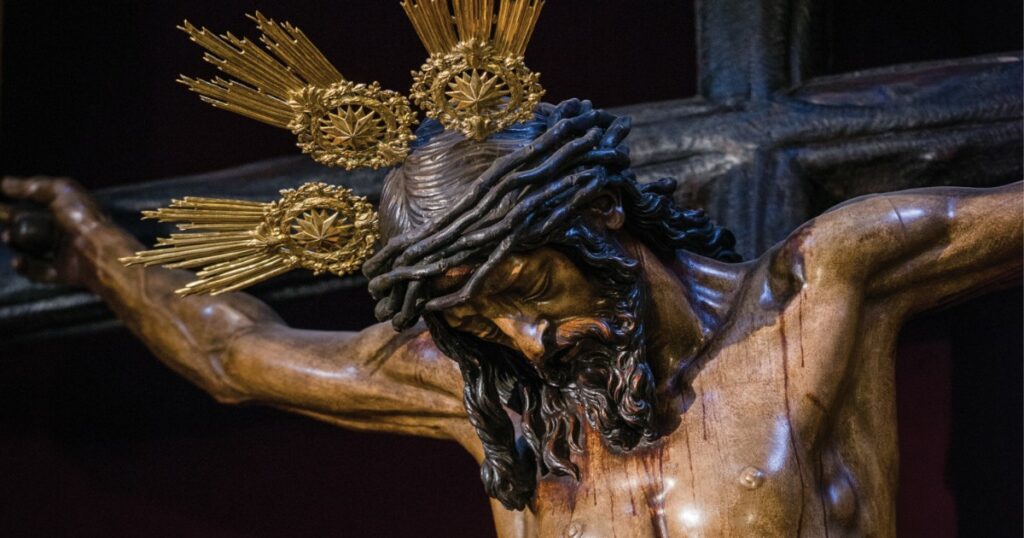
Thus, Mary anointed Jesus as King. The next day, Jesus rode into Jerusalem on a humble pack animal, just as the kings of Israel did (1 Kings 1:38). The crowds acknowledged Him, shouting, “Hosanna! Blessed is He who comes in the name of the Lord, even the King of Israel!” (John 12:13). As you read in the Palm Sunday devotion, John notes that this fulfilled the prophecy of Zechariah 9:9. The soldiers who mocked Jesus said more than they realized when they exclaimed, “Hail, King of the Jews” (John 19:3). But perhaps the greatest acknowledgement of Jesus’ royal position came even as He was crucified, when Pilate posted the charges of which Jesus was convicted above our Lord’s head on the cross: “Jesus of Nazareth, the King of the Jews” (John 19:19).
Mary’s simple act of anointing Jesus for His burial serves to show us the great Priest, Prophet and King who fulfilled all of these offices in this week in Jerusalem. As Prophet He declared God’s Word. As Priest He offered Himself as the ultimate sacrifice. As King He rose from the dead to live and reign to all eternity.

This devotion originally appeared in the April 2025 issue of The Lutheran Witness.
Find the rest of LW‘s Holy Week devotion series here.