

By Timothy Pauls
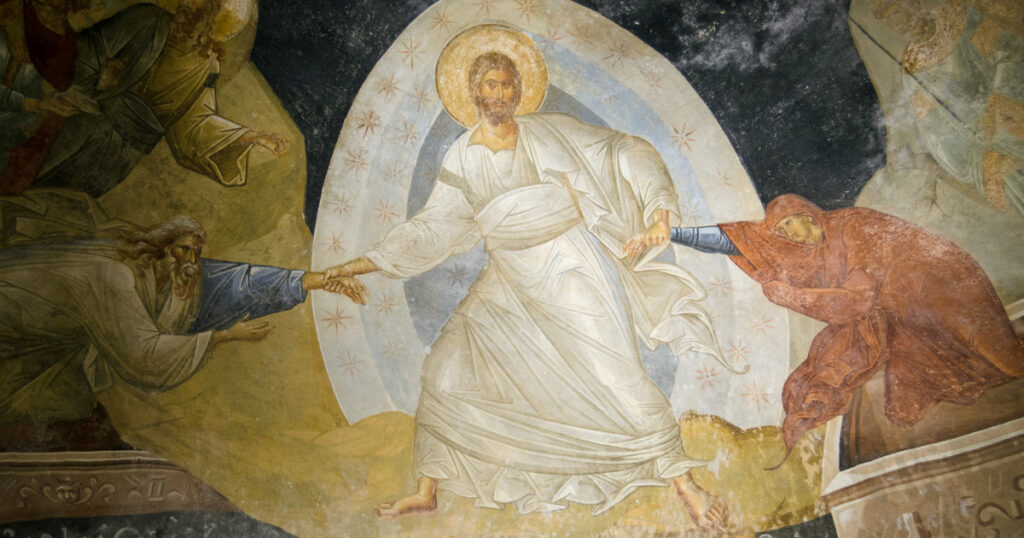
This summer, the LCMS convention will convene under the theme “Christ Is Risen Indeed,” based on 1 Corinthians 15:20–22. In July, the Easter season will be long past. Why the focus on Christ’s resurrection? Why, exactly, is the resurrection so important for Christians?
“If Christ has not been raised, your faith is futile and you are still in your sins.”
That’s one of the most jarring verses in the Bible. The next two aren’t any better: “[If Christ has not been raised,] then those also who have fallen asleep in Christ have perished. If in Christ we have hope in this life only, we are of all people most to be pitied” (1 Cor. 15:17–19).
Multiple recent surveys have indicated that approximately 25% of self-identified Christians deny the resurrection of Jesus, considering it unnecessary for the Christian faith. St. Paul couldn’t disagree more. In truth, the resurrection undergirds all of the Christian faith. A quick look at the Small Catechism will prove the point.
Let’s start with the Ten Commandments — if Christ has not been raised, it wouldn’t affect the Commandments, would it? The truth is, it would impact them profoundly. We are commanded to keep the Law because “God threatens to punish all who sin against these commandments” (SC I) — and foremost is the threat of eternal condemnation. But if there is no resurrection, there is no Judgment Day, and the Law of God is just one more code of behavior for this life. The chief purpose of the Law is, of course, to show us our sin and drive us to our risen Savior for grace (Rom. 3:19–26); but if Christ isn’t raised from the dead, we have no Savior.
The substance of the Creed evaporates, too, if Christ has not been raised. The Creed’s Second Article ends with the news that Jesus was “crucified, died and was buried.” If He didn’t rise from the dead, He didn’t ascend into heaven, doesn’t live and reign, and is not coming to judge the living and dead. The Creed’s Third Article would then vanish, because the Holy Spirit doesn’t come if Jesus hasn’t ascended to the Father (John 16:7–11). The Creed is reduced to acknowledging a distant Creator.
How about the Lord’s Prayer? All its petitions but the fourth are about salvation: We pray that God would send His Word and Spirit and thwart evil, so that we might remain in the faith and be strengthened against temptation until we are delivered to everlasting life. However, none of that matters if Christ is not raised and there is no eternal life. That would leave us with only “Give us this day our daily bread.” But why would our Father in heaven even hear that prayer? He hears our prayers for the sake of Jesus, who sits at His right hand and intercedes for us because He is risen from the dead (Rom. 8:34). If Jesus isn’t raised, we’re on our own.
This brings us to Holy Baptism, where we are joined to Jesus’ death and resurrection (Rom. 6:4–5). But if there is no resurrection, we end in death.
Indeed, what about that part of the baptismal formula, “In the name of the Father and of the Son and of the Holy Spirit”? If Christ is not raised from the dead, has the unchanging God been reduced from three persons to two? I suppose the question is moot, since Christ instituted Baptism after His resurrection, and if Christ has not been raised from the dead …
As Holy Baptism falls, so does the Office of the Keys. It was the risen Christ who gave His church authority to forgive sins so that people might have eternal life in Him. Without His resurrection, there is no absolution.
Finally, then, we arrive at the Sacrament of the Altar, which is the “true body and blood of our Lord Jesus Christ.” Except it can’t be if Christ isn’t raised from the dead and no longer has a living body.
St. Paul is absolutely right when he declares that our faith is futile and we are most to be pitied if Christ has not been raised from the dead. Among other things, this should inform our evangelism: We are often tempted to believe that we must make Christianity appear practical and sensible to people before we get to the “unusual” teachings like the death and resurrection of God’s only-begotten, incarnate Son for our salvation. But that’s not how the apostles preached. If there is no resurrection, there is nothing practical or sensible about being a Christian.
It’s just another religion with a far-away God and no grace, whose followers are fooling themselves.
But if 1 Corinthians 15:17–19 are some of the most jarring verses in the Bible, verse 20 is one of the most joyous: “But in fact Christ has been raised from the dead, the firstfruits of those who have fallen asleep.”
In fact, Christ has been raised from the dead!
Time to throw this gloomy article into reverse. Buckle up.
Because Christ is raised from the dead, those Ten Commandments have a whole new glow. Yes, we are compelled to take them seriously because the risen Christ is coming in judgment, but He is risen with forgiveness for all the times we fail. More than that, we are created in the risen Christ to do good works (Eph. 2:4–10). As we follow His commandments, we walk in His steps (1 Peter 2:18) and serve as His instruments to those around us. Our lives have divine purpose.
Because Christ is raised from the dead, the Creed is back to three articles, full force — Trinity intact! The risen Jesus is ascended into heaven, where He sits at His Father’s right hand and intercedes for us, for He is our high priest who has offered the sacrifice for sins (Heb. 9:11–12). For Jesus’ sake, the Father calls us His children, beloved and forgiven. For Jesus’ sake, the Holy Spirit goes forth and delivers forgiveness and faith by means of His Word and Sacraments. For Jesus’ sake, we grieve with hope: We boldly confess “the resurrection of the body and the life everlasting.”
Because Christ is raised from the dead, the Father delights to hear your prayers (Luke 11:11–13). And when He answers with daily bread different than you were hoping for, you still know that He is working all things for your good (Rom. 8:28).
If that’s not enough cause for joy, there’s more! In Holy Baptism, you are joined to the death and the resurrection of Jesus (Rom. 6:1–5). You already walk in newness of life, confident of the resurrection on the Last Day. By means of the Office of the Keys, the risen Lord speaks His life-giving Word of forgiveness into you as surely as He once commanded, “Lazarus, come out [of the grave]” (John 11:43). And in the Sacrament of the Altar, the risen Jesus gives you His body and blood that have already conquered death for you.
There is nothing about your life that is not joyously touched by the resurrection of Jesus. All of this informs the joy of the Easter acclamation, “Alleluia! Christ is risen! He is risen indeed! Alleluia!” When St. Paul writes of the futile faith of those still in their sins in 1 Corinthians 15:17, he is not describing Christians. He’s describing everybody else, those who have no hope in the risen Christ. Hopelessness is not for you: Forgiven by the living Savior, you walk in joy and peace, confident of eternal life and with Good News to share … because Christ is risen indeed!
To read a full Bible study on the convention theme, authored by Rev. Pauls, visit https://www.lcms.org/convention/national/worship/bible-study.
This article originally appeared in print in the May 2026 issue of The Lutheran Witness.