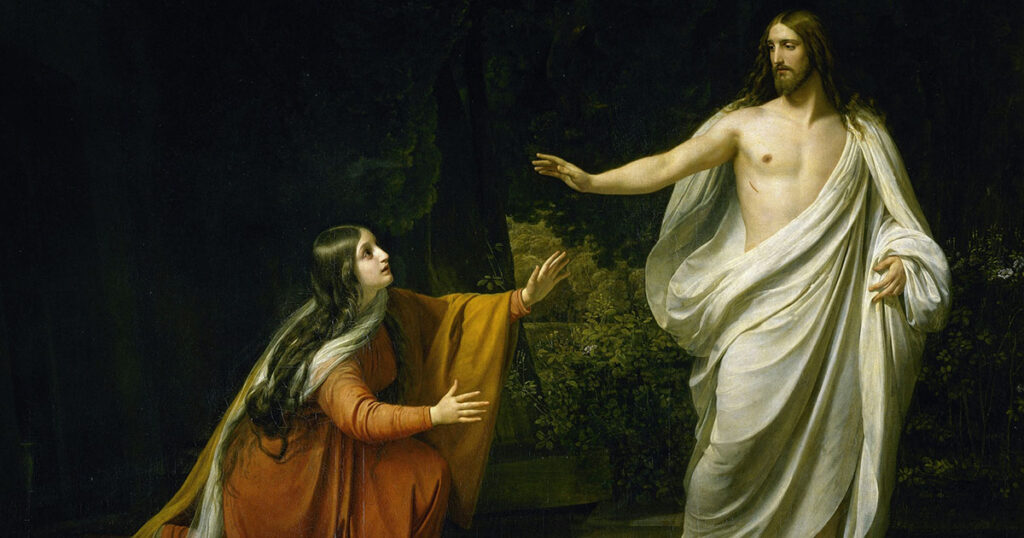


They break my heart, those important words of the Ash Wednesday liturgy: “Remember, O man, that thou art dust, and to dust shalt thou return.” It’s the babies that bother me the most. Who wants to pronounce doom on the little ones?
Yet we must remember. Although it’s excluded from our modern forms, I say it the old way: “Remember, O man.” That “O man” is spoken to the entire human race, everyone born from Adam. For his children — both daughters and sons — are forgetful.
The command “remember” is about identity. Who are you?
Ash Wednesday calls us to remember our mortality, and the sin causing it. The flip side is the Supper Jesus instituted, calling us to remember His death. The cross of Jesus remits sin and undoes death. The Holy Communion also then says, “Remember!”
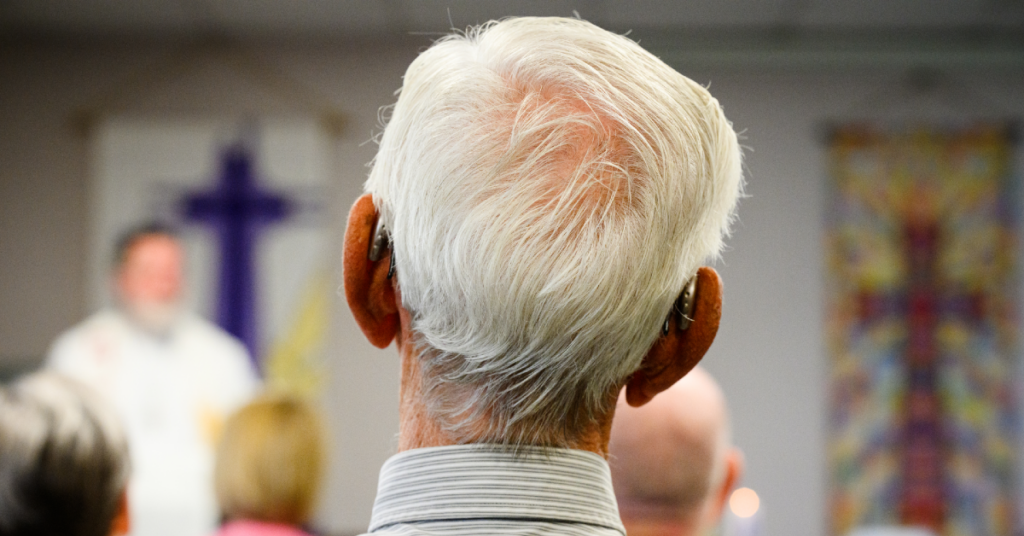
These are the thoughts on my mind when dealing with a child whose intellect is not yet formed — or an adult whose memory is fading.
One woman I visit, in a memory-care facility, I’ve known for over 25 years. She was a voracious reader. Her memory was once excellent. She knew Holy Scripture and the Small Catechism — much of it by heart. Now, she doesn’t remember anyone’s name.
Does she have faith if she cannot remember basic details of her life, let alone answer theological questions?
God’s command, “Remember!” doesn’t place a burden on our intellect. To be sure, “Everyone to whom much was given, of him much will be required” (Luke 12:48). We should memorize as much as we can. But what shall we say of those whose memory is fragmented by dementia? What shall we say of those who, through intellectual disability, cannot speak, much less recite? “To whom much is given, much shall be required” has an obvious, if unstated, corollary: To whom little is given, little shall be required.
The cause of the Pelagian controversy in the fifth century was a quotation of St. Augustine’s preached in a sermon at Rome: “Give what you command, and command what you will.”[1] Augustine’s radical monergism was too much for the heretics Pelagius and Celestius, who believed something in man was necessary for salvation. Augustine rightly recognized that God’s command can only be met by what God Himself supplies. The prayer (from Augustine’s Confessions) laid everything at God’s feet: God’s commands can only be kept by what God gives.
The Reformation slogan “faith alone” can, when misunderstood, make faith into just another kind of work, where everything is now placed back on man. He must manufacture, create or emote himself into the right state of belief in order to please God. Yet this slogan, when it is rightly understood, empowers us to confess with St. Paul that man cannot work salvation for himself and to point troubled consciences away from the bondage of needing to satisfy God by something within themselves:
But now the righteousness of God has been manifested apart from the law, although the Law and the Prophets bear witness to it — the righteousness of God through faith in Jesus Christ for all who believe. For there is no distinction: for all have sinned and fall short of the glory of God, and are justified by his grace as a gift, through the redemption that is in Christ Jesus, whom God put forward as a propitiation by his blood, to be received by faith. (Rom. 3:21–25)
Faith receives. It is not the source. God is. God supplies what is needed. God creates what is needed in man. If He created the world from nothing — and He did — then He can also create in the Alzheimer’s patient, the infant at the font or the intellectually disabled teenager the faith that receives His gift.
Such gifts can be, but are not necessarily, measured in Scripture memory quizzes. In our parochial school, I give weekly memory quizzes, requiring our young scholars to write out passages from the Bible and the Small Catechism. To whom much is given, much shall be required.
But this is not faith. Faith believes the promises. The infant trusts mother and father — and God — by something far deeper than intellect.
So how should we approach the Alzheimer’s patient, the infant, the intellectually disabled? We approach them with the Word — the Word that creates from nothing.
In my sermon at the 2026 LCMS Convention in Phoenix this past summer, I shared the story of the woman I mentioned earlier, whose memory seems absent. When I visit her, I read the Scriptures and watch her react as though she is hearing them for the first time. To her, they seem altogether new. She is amazed at the generosity of the Wise Men, the graciousness of God, the astounding miracles of the incarnate Word.
And then, when I sing the liturgy, she sings it right along with me. Every pastor will tell you the same story. These forgetful ones remember. It used to bother me when such people would say “the pastor’s part.” Now I think it’s fantastic. At this point in the game, there are no “parts.” There’s only God’s Word.
But whether they can speak the words back to us or not, whether they are comatose or asleep or wide awake, we trust God’s Word to accomplish the thing for which it is sent (Isaiah 55:11) and do not rely on our perception of a person’s cognition or intellect to measure its success. God speaks, and it comes to be (Psalm 33:9). The entire universe is upheld by His Word (Heb. 1:3). This Word makes those who are perishing born again (1 Peter 1:23). For this reason, preaching, visiting the sick and dying, parenting our littlest ones — everything depends on the Word. What falls to us who have — for the moment — full cognition and memory is to read, speak and trust that Word to do God’s work. The Word is powerful. The Word is creative. The Word is sufficient.
And for those whose memory is fading, we can give this comfort: God, too, is forgetful. It seems impossible. How can One who knows everything forget anything? Yet He does; He chooses to forget our sins. He promises, “For I will forgive their iniquity, and I will remember their sin no more” (Jer. 31:34). And again, “I, I am He who blots out your transgressions for My own sake, and I will not remember your sins” (Isaiah 43:25; see also Heb. 8:12; 10:17).
The Lord remembers His mercy, and He remembers not our sin. He yet holds the forgetting ones in His hand, and He will not let them go. Even in the grave He will remember, and awaken, and they shall stand again, forgetting their forgetfulness. They shall remember the One who never forgot them. And in His kingdom, they shall forever rejoice.
[1] Alister McGrath, The Spirit of Grace, vol. 4 of Christian Belief for Everyone (SPCK, 2015), 59.
Image credit: LCMS Communications/Erik M. Lunsford