


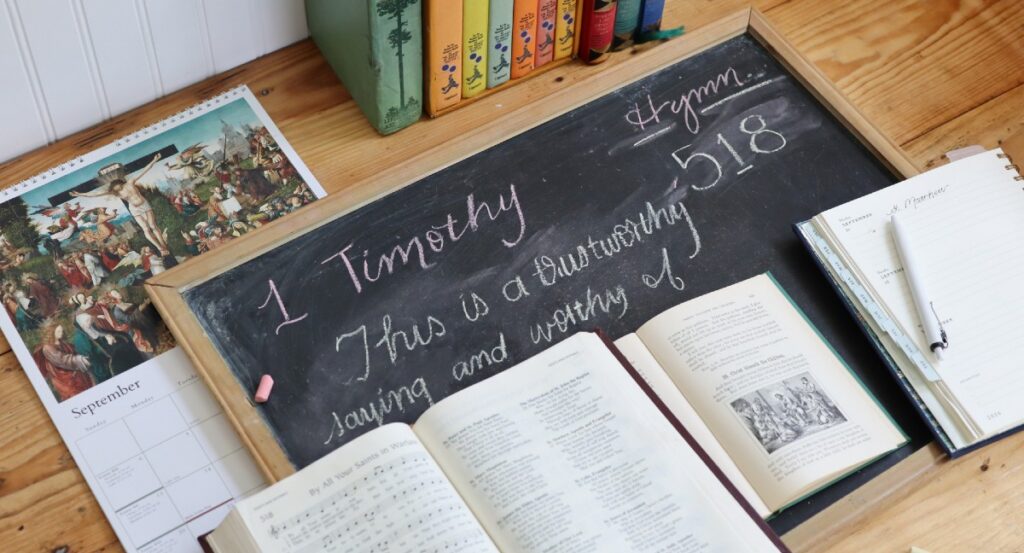
This is the latest installment of “Life in the Church Year,” a series by Dr. Kristen Einertson and Tessa Muench of All the Household. This series provides guidance for living out the seasons of the Church Year at home with your families. Find month-by-month lists of Lutheran feasts, festivals and commemorations here.
Every September, the world begins to remind us of how quickly things change. Gardens fade, leaves turn color and summer routines transition to those of autumn. In our U.S. context, it is also “back to school” season, when many of us gather our new notebooks, sharpen our fresh pencils and fill in our planners as we anticipate another year of learning. We ponder what our classes will be like, who our teachers and professors will be and what expectations they will place upon us. As we embark on another year of school, however, it is only fitting that we devote some of our attention to life’s other, deeper lessons as well.
This is the “curriculum” of life in the Church Year. Its lessons are not confined to a classroom or textbook but are learned week after week as the church gathers around God’s enduring Word. Even amid all the changes we undergo from season to season and year to year, the church continues to build its shared life on a foundation that does not pass away: “The grass withers, the flower fades, but the word of our God will stand forever” (Isaiah 40:8). Indeed, the Word of God provides the pattern for this ongoing curriculum, ordering the months, weeks and days of the church year around that which endures. Through the spiritual lessons outlined for us in the church’s rhythms of feasting and fasting, celebration and commemoration, liturgy and lectionary, we are continually strengthened in faith and conformed to Christ.
Lessons from the Lectionary
Among the many lessons in the church’s curriculum, two are especially worth noting.
First, the church teaches us the importance of the lectionary. Christians have never treated the Bible as merely another book to consult from time to time but have instead understood God’s Word as determinative to ordering our days, shaping our lives of prayer, forming our worship and renewing our minds. One of the church’s greatest gifts toward this end has come to us in the form of the lectionary — a carefully ordered pattern of readings that places us within the whole story of salvation. Week after week, year after year, the same Scriptures wash over the church as a collective whole when she gathers for worship. Through this repetition, the Old Testament, Epistle and Gospel readings become like old friends to us. Over time, passages from Scripture that were perhaps once unfamiliar to us begin to surface naturally in our minds, prayers and conversations, especially in our times of need.
Second, the church teaches us the importance of not only hearing God’s Word in the context of corporate worship but also carrying it with us in our hearts and minds. Keeping the Word of God close can be as simple as selecting one verse from each week’s Gospel lesson to learn by heart. It could also look like using the lectionary to inspire your memorization of larger portions of Scripture that revolve around a monthly theme. Think of memorizing Luke 2 (the Nativity story) in December or Isaiah 53 (foretelling Christ’s cross) during Lent.
Treasuring the Enduring Word
The importance of these two lessons is that they serve as a lifeline for us throughout our entire earthly journey. Indeed, the church’s lessons are never meant to be abstract. Through the particular seasons, readings, holidays and commemorations the church passes down to us, we grow closer to our Lord and learn to live lives that bear witness to Christ.
This month’s commemoration of St. Matthew on Sept. 21 provides an apt opportunity for this. We remember Matthew not just as a former tax collector but also as an evangelist and apostle whom Christ transformed with His Word, turning a man who counted the earthly treasures of this world into one who helped hand down the heavenly treasure of the Gospel.
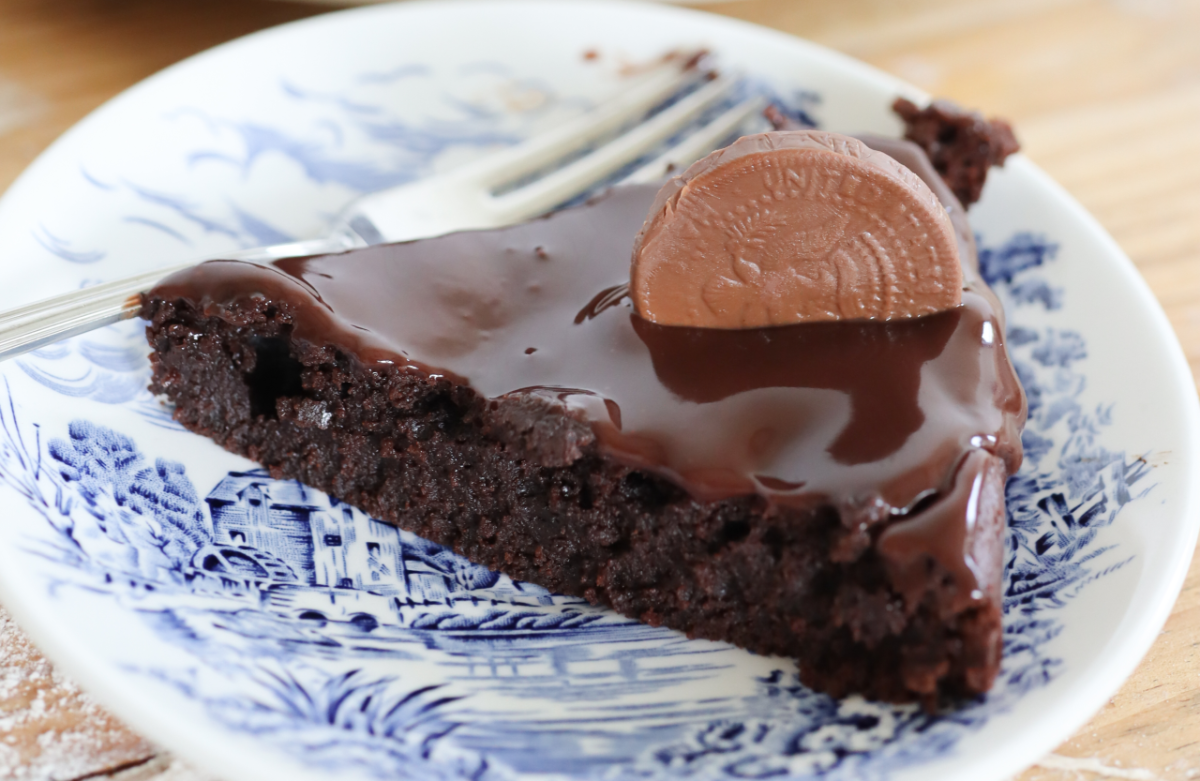
In baking All the Household’s golden chocolate coin cake recipe for St. Matthew’s Day, we have the opportunity to remember that even ordinary things can become occasions for recalling God’s extraordinary gifts. The chocolate coins remind us of Matthew’s former vocation, while the Gospel he proclaimed reminds us that Christ’s Word is a treasure far greater than any earthly wealth.
As you gather to enjoy this simple dessert, consider reading Matthew 9:9–13, where Jesus calls Matthew to follow Him. Doing so will allow you to see this commemorative activity as more than just a sweet tradition and to recognize it instead as another way that the church’s “curriculum” draws us into hearing, remembering and living alongside the enduring Word of God together. May this small celebration remind you that the greatest treasure we receive is not found in gold coins but in the lessons that our Lord gives to us through His gift of Scripture.
For month-by-month lists of Lutheran feasts, festivals and commemorations, visit lcms.org/worship/church-year.
St. Matthew Golden Coin Cake
Ingredients:
- 1 cup semisweet chocolate chips
- ½ cup unsalted butter, room temperature
- 3/4 cup granulated sugar
- 1/4 tsp. salt
- 2 tsps. coffee
- 1 tsp. vanilla extract
- 3 large eggs
- 1/2 cup cocoa powder
- Gold chocolate coins for topping
Chocolate ganache:
- 1 cup semisweet chocolate chips
- 1/2 cup heavy cream
Instructions:
- Preheat the oven to 375°F. Grease an 8- or 9-inch round cake pan and line the bottom with parchment paper.
- Combine the chocolate chips and butter in a microwave-safe bowl. Heat until the butter is melted and the chocolate is softened, stirring until smooth. Reheat briefly if needed. Transfer the mixture to a large mixing bowl.
- Stir in the sugar, salt, coffee and vanilla extract until combined.
- Add the eggs and beat until smooth. Fold in the cocoa powder just until incorporated, being careful not to overmix.
- Pour the batter into the prepared pan and bake for about 25 minutes or until a thin crust has formed on top.
- Cool the cake in the pan for 5 minutes. Run a knife around the edge of the pan, then invert the cake onto a serving plate. Allow it to cool completely.
- Meanwhile, prepare the ganache by combining the chocolate chips and heavy cream in a microwave-safe bowl. Heat until the cream is hot, then stir until the chocolate is completely melted and the mixture is smooth.
- Spread the ganache evenly over the cooled cake. Let it set before slicing (refrigerating the cake will speed the process).
- Just before serving, decorate each slice with gold chocolate coins in honor of St. Matthew.
Cover image and photo: Tessa Muench



Wait. There is no flour in this cake?
What a coincidence that I’m reading through Matthew’s gospel with my 1st grader and kindergartener for the first 6 months of this new homeschool year so this will be a fun recipe to do in home ec.
Thank you
We just checked with the authors, and yes: “You have it correct that this is a flourless cake recipe, totally flour-free!” — Ed.