


By Joshua Hollmann
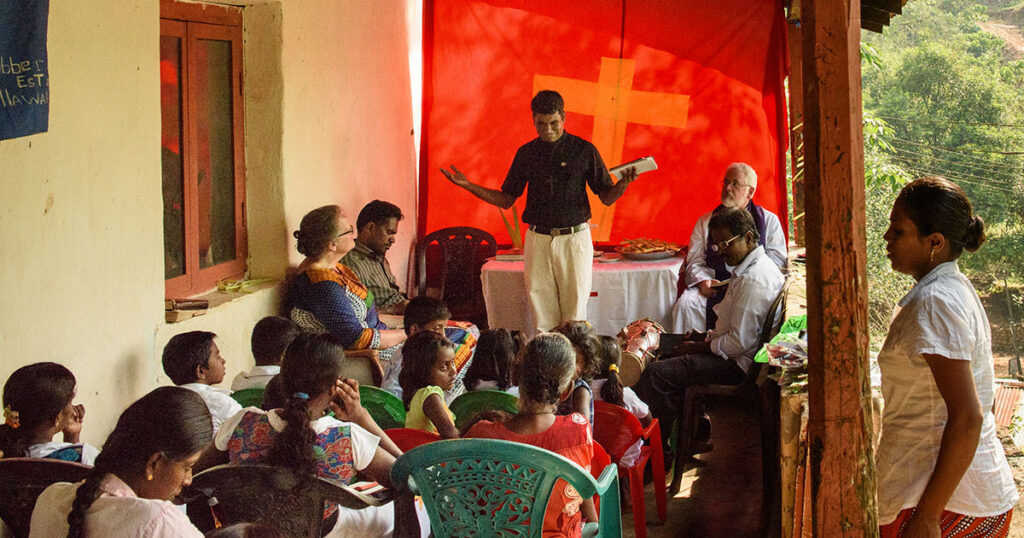
Around the world and across the ages, the unity of the universal church is rooted in the Triune God. The ancient Athanasian Creed confesses the “catholic” faith of the Christian church as the worship of “one God in Trinity and Trinity in Unity”: Father, Son and Holy Spirit. The word “catholic” refers to the universal faith that Christians around the world believe, teach and confess together, in many languages. God’s Word teaches that there is one Lord, one faith and one Baptism (Eph. 4:5). The church’s one foundation is Jesus Christ her Lord (LSB 644). This Triune God is revealed in His Word and received in worship in Word and Sacrament. Through the centuries, the church has continued to worship and confess this Triune God across cultures.
The fourth-century Nicene Creed — founded upon God’s Word and professed in Christian corporate worship — fleshes this out further, affirming four biblical marks of the church across cultures: The true church is one, holy, catholic and apostolic. The church’s worldwide ministry and mission, grounded in God’s Word and worship, exist and extend across cultures. The church is called by the Lord Jesus Christ to make disciples of all nations by baptizing and teaching God’s Word in the name of the Father, Son and Holy Spirit (Matt. 28:19–20). As the Gospel of Luke and the Book of Acts testify, God’s Word of repentance and forgiveness of sins is proclaimed to the ends of the earth (Luke 24:47; Acts 1:8).
But if the church can exist in vastly different cultural contexts and time periods, what is it that makes her remain the church? As we consider what the Christian church looks like in quite varied contexts, let’s explore these four words the Nicene Creed assigns to her.
One: The Christian church of all times and places is unified in the saving message of Christ and His Gospel. The Gospel of Christ transcends cultural barriers and brings unity of faith across cultures in the name of the Father, Son and Holy Spirit. Only the Good News of Jesus Christ brings forgiveness of sins, removes shame and restores fallen and sinful men and women to the wholeness of life and salvation. The Christian church boldly witnesses to all cultures that there is no other name than Jesus by which we are saved (Acts 4:12). Jesus is the way, the truth and the life, and no one comes to the Father except through Him (John 14:6). The Lord Jesus Christ has the words of eternal life (John 6:68). While the Word of God is translated into different languages and proclaimed around the world, there is one Lord and one message of salvation in Christ alone that unites the Christian church across cultures. The one church across cultures reminds Christians that their shared foundation is God’s Word.
Holy: The Christian church is holy and set apart by God for service and witness to God: Father, Son and Holy Spirit. Lutherans believe, teach and confess God’s Word and the Lutheran Confessions because they are a true exposition of Holy Scripture. Faithful Lutheran theology is taught in a variety of cultures and contexts for the sake of the Gospel of Christ. Article IV of the Apology of the Augsburg Confession on justification by faith alone teaches that, at its center, Lutheran confessional theology illumines and magnifies Christ and brings the necessary and abundant consolation of the Gospel. Lutherans teach, as Scripture teaches, that this is the core message of the true church across cultures: that we are freely justified and saved by God’s grace alone through faith alone on the merits of Christ alone. The holy and set apart church across cultures reminds believers of the centrality of grace alone, faith alone and Christ alone.
Catholic: The Christian church is universal and worldwide. Christian piety and practice may look and sound different depending on where across the world Christianity is lived out. No matter the context or the situation, the Christian church is founded on the confession of Jesus Christ, the Son of the living God and the Lamb of God who takes away the sin of the world (Matt. 16:16; John 1:29). As Martin Luther writes in his explanation to the Third Article of the Apostles’ Creed in his Small Catechism, the Holy Spirit “calls, gathers, enlightens, and sanctifies the whole Christian church on earth, and keeps it with Jesus Christ in the one true faith.” In all gatherings of the baptized people of God around the world, the Holy Spirit works to daily and richly forgive the sins of all believers. The catholic church across cultures reminds individual Christians that they are part of a worldwide community of believers in Christ.
Apostolic: The Christian church is the worldwide household of God, built upon the foundation of the apostles and prophets with Jesus Christ being the chief cornerstone (Eph. 2:20). “Apostolic” refers both to the apostles’ teaching of Christ as found in Holy Scripture and to the way the church is sent in mission by Christ through the power of the Holy Spirit (Luke 24:49). The church faithfully follows God’s Word and proclaims the saving Gospel of Christ across cultures. C.F.W. Walther, the first president of The Lutheran Church—Missouri Synod, reminds Christians in Thesis XXV of Law and Gospel that the reason the church exists is to proclaim the saving Gospel of Jesus Christ for everyone everywhere. The apostolic church is equipped with God’s Word and empowered by the Holy Spirit to preach Christ crucified to all nations. The apostolic church across cultures reminds Christians of the primary importance of proclaiming the Gospel of Jesus Christ for the life of the world.
The Christian church across cultures is one, holy, catholic and apostolic, the mystical Body of Christ on earth and in heaven. This church also exists across time and eternity. The Book of Revelation provides a sneak peek of heaven and the life of the world to come. Heaven is described as “a great multitude that no one could number, from every nation, from all tribes and peoples and languages, standing before the throne and before the Lamb” (Rev. 7:9). One day all believers in Jesus from every nation and language will be assembled together in endless praise before Christ, the Lamb of God. Until then, the one, holy, catholic and apostolic church is called by Christ in the Holy Spirit to make disciples of all nations and to gather all peoples and languages together around Word and Sacrament. The multicultural and multilingual church here on earth offers a foretaste of the heavenly feast to come.
Cross-cultural ministry and mission can at times prove daunting. Foreign cultural norms are often difficult to understand and navigate. In spite of these challenges, Christians are sent to serve all peoples from all nations in, with and under the cross of Christ. Cross-cultural ministry is cruciform, humble, patient, kind and patterned on the self-giving life of Christ (Luke 9:23; 1 Cor. 6:2, 13:4). The crucified and risen Christ crosses over the divide of sin, death and the devil and offers to everyone the forgiveness of sins, life and salvation. In the transformative love of God, the Gospel of Christ crucified unites believers from different cultures, ethnicities and languages together as one, holy, catholic, apostolic and everlasting communion of faith. The church across cultures reminds Christians that there is peace with God and with all Christians near and far only through the cross of Christ. As the apostle Paul writes in Ephesians 2: “But now in Christ Jesus you who once were far off have been brought near by the blood of Christ. For He Himself is our peace.” Christ alone and His cross unite the Christian church across cultures.
The Rev. Dr. Joshua Hollmann is professor of Systematic Theology at Concordia University, St. Paul, and pastor of True Light Lutheran Church in New York City.
This article originally appeared in print in the June/July 2026 issue of The Lutheran Witness.
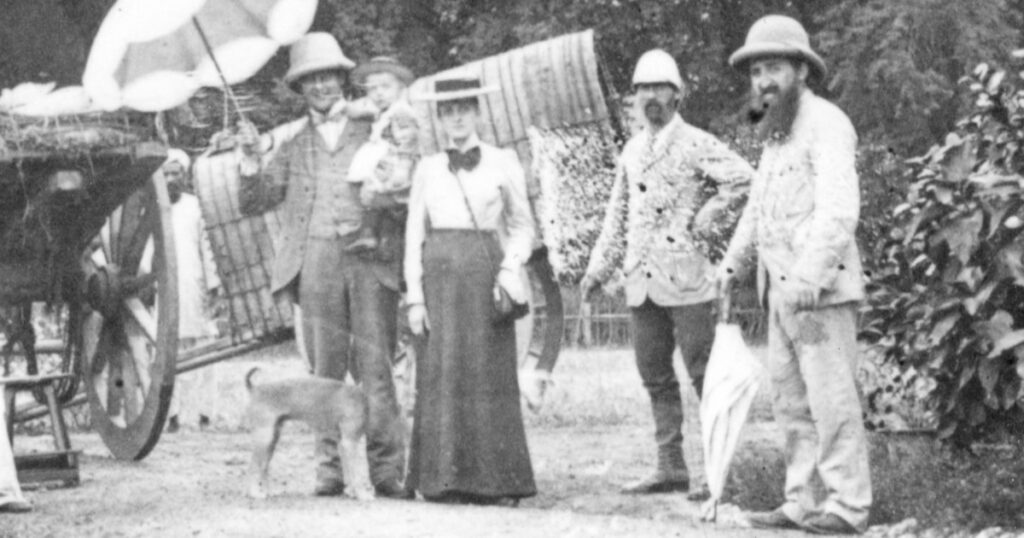


The one, holy, catholic and apostolic Church is also known as the Invisible Church, which is within, but distinguished from, the Visible Church.