
This is the latest installment of “Life in the Church Year,” a series by Dr. Kristen Einertson and Tessa Muench of All the Household. This series provides guidance for living out the seasons of the Church Year at home with your families. Find month-by-month lists of Lutheran feasts, festivals and commemorations here.
Have you ever stopped to consider how life in the Church Year is inherently communal? Everything Christians do is a participation in the life of Christ, lived alongside our fellow members of His Body. This is why St. Paul, even while confined to a prison cell, could confidently proclaim that “there is one body and one Spirit — just as you were called to the one hope that belongs to your call — one Lord, one faith, one baptism, one God and Father of all” (Eph. 4:4–6). At the foundation of our life in the church is this shared Lord, faith and Baptism that binds us together in Christ.
The Church Year helps give shape to this shared life. It directs Christians’ attention toward the same things at the same time: Over the course of just one year we wait together for Christ during Advent, rejoice at His birth during Christmas, follow Him toward the cross during Lent and proclaim His resurrection at Easter. Besides this, we also are joined together when we hear the same Scriptures, sing the same hymns, confess the same Creed and kneel together at the same altar. Even the Lord’s Prayer reminds us that the Christian life is never individual, as Jesus teaches us to pray not “My Father” but “Our Father.” We ask Him to give us our daily bread, forgive us our trespasses and deliver us from evil. Indeed, life in the church is life lived together.
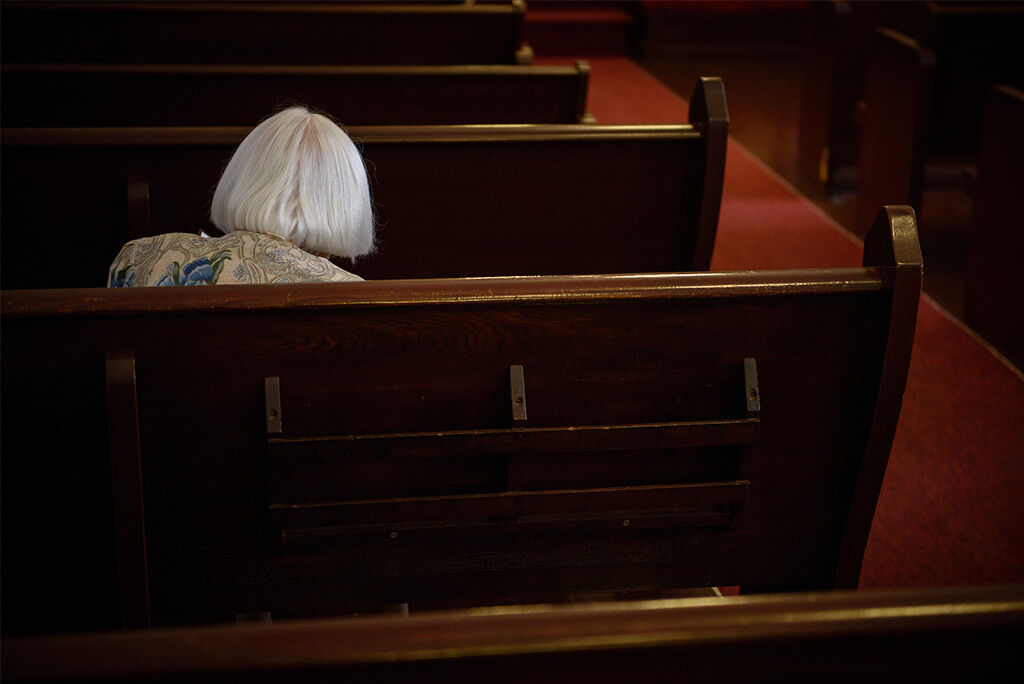
Yet this community extends far beyond the people we can presently see. Our prayers, services, festivals and commemorations join us to Christians across time and place, extending behind us and forward from one generation to the next. The Church Year reminds us that we belong to something much older and larger than ourselves: The whole company of believers includes those whose lives are, have been and will be gathered into Christ. While this can be a difficult concept to wrap our minds around, few months make this reality more visible than November.
With All the Saints
This month begins with All Saints’ Day, when the church remembers those who have died in Christ and rejoices in the communion we share with them. Taking time to remember all these saints together is important, as it reminds us that the Christian community is not confined by geography, generation or even death. We even confess in the Creed our belief in this “communion of saints,” knowing that those who have died in the faith remain members of the same Body of Christ into which we have all been baptized.
This concept can likewise change the way we think about the commemorations scattered throughout the rest of the church calendar. When we remember Christians who lived hundreds or even thousands of years ago, we are not just studying interesting figures from church history; we are getting to know living brothers and sisters in Christ. Their stories are part of our shared inheritance in the church. Their hymns and prayers enrich our own, and their faithful witness encourages us to remain steadfast in our own vocations. Through these commemorations, children and adults alike begin to know the church as a family whose story transcends our own lifetimes.
This understanding of our shared life also turns our attention outward toward the neighbors God has placed around us. A Christian community gathered around Christ should be recognizable by the love its members show one another and the world. Jesus tells His disciples, “Let your light shine before others, so that they may see your good works and give glory to your Father who is in heaven” (Matt. 5:16). Thus we can be encouraged that the hospitality of a Christian home, the care we offer to a suffering neighbor, the meals shared around a table, and even the beauty and joy of Christian celebration can invite others to glimpse something of the goodness of the God who has gathered us together.
The Light of St. Martin of Tours
We see another great example of this “communal living in Christ” on Nov. 11, when we remember and give thanks for St. Martin of Tours.
Martin lived during the fourth century and served as a Roman soldier before eventually becoming bishop of Tours. The most famous story from his life tells of his encounter with a poorly clothed beggar. Seeing the man suffering in the cold, Martin is said to have cut his own military cloak in two, giving half to the stranger. It became known as a striking illustration of Jesus’ words that “as you did it to one of the least of these My brothers, you did it to Me” (Matt. 25:40).
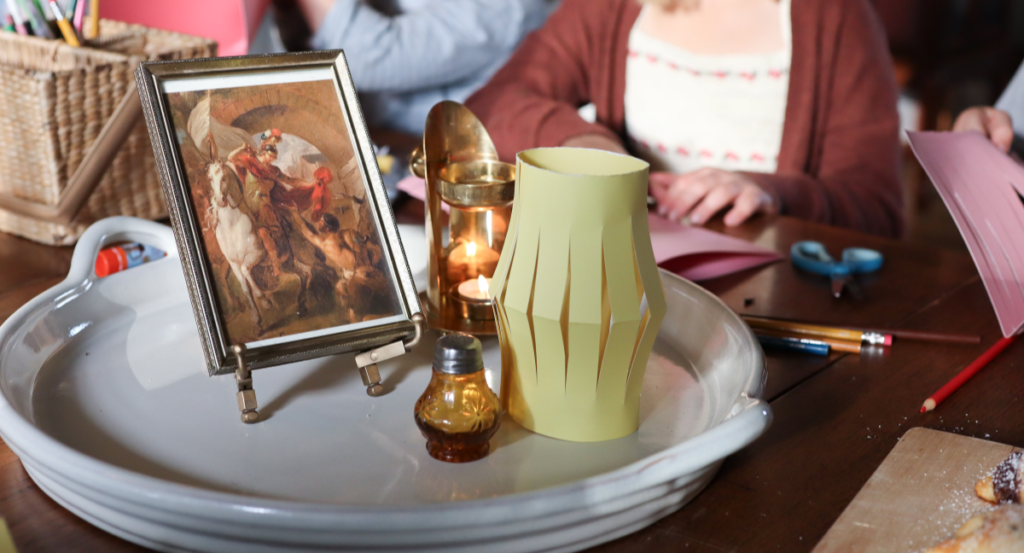
Keeping the origins of this saint’s story in mind, it is more than fitting that celebrations of Martin’s life have often become very communal occasions. For centuries, Christians have observed Martinmas by sharing sweets, singing carols and processing down streets with candles. The traditional image of children carrying glowing lanterns through the November darkness offers a tangible reminder that the light we have received in Christ is not something we keep to ourselves.
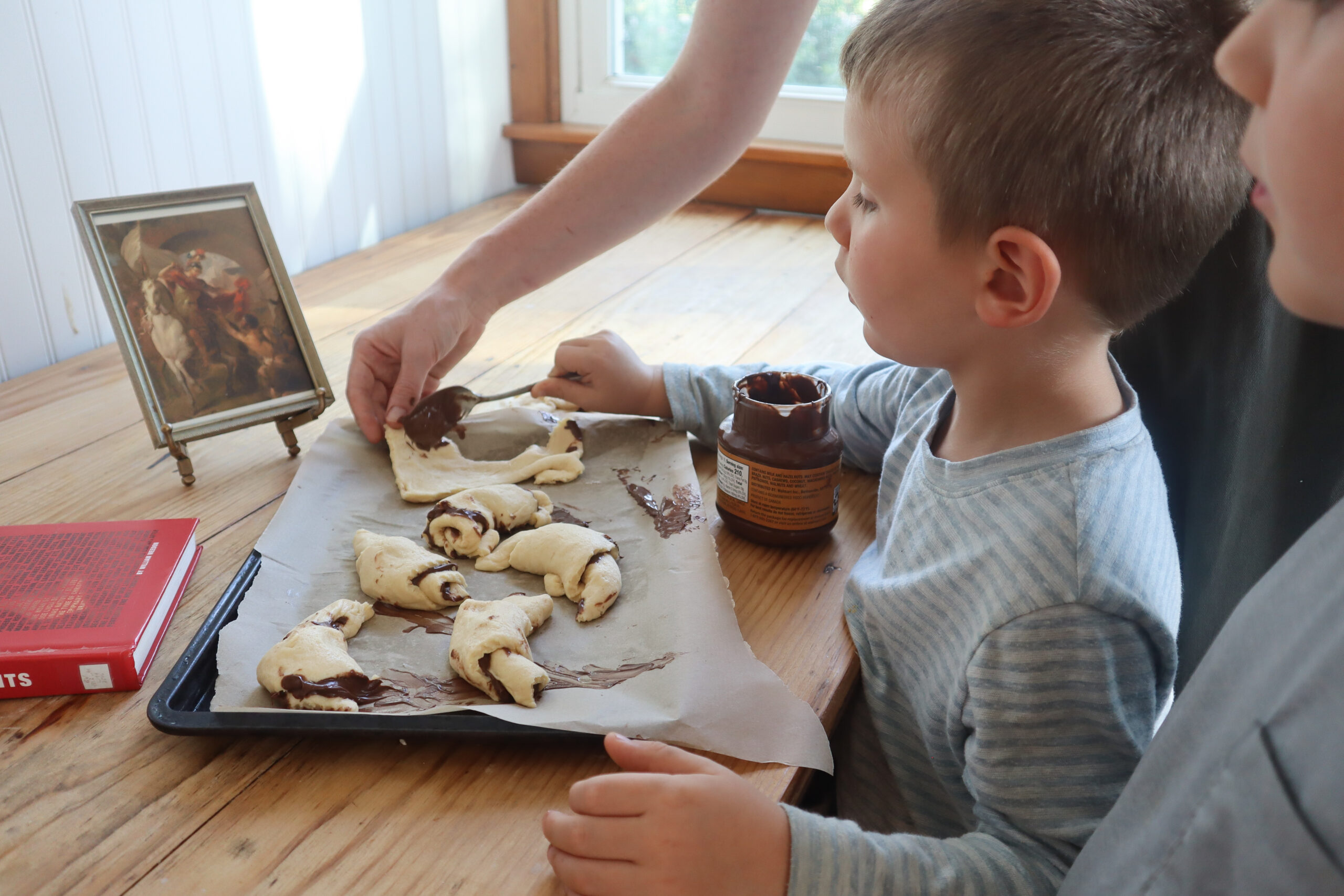
To celebrate the communal nature of Christianity this month, try taking a page out of St. Martin’s book and light candles or make a simple paper lantern. Sing a carol together (find translated options on the All the Household website), and consider collecting food or clothing for someone in need within your community. You might also prepare and serve a traditional treat, such as the “St. Martin Horseshoe” pastry, which recalls his years as a Roman cavalryman. Below, you’ll find a simple recipe you can share with your family, friends and neighbors.
As you celebrate, remember that even a small gathering among Christians can communicate the idea that the Church Year is about turning our focus away from ourselves and directing our attention instead toward Christ, toward the saints in whose lives He has worked before us, and toward the neighbors God has given us to love.
This November, invite someone to share your Christian life with you: to sing together, to pray together, to feast together and to rejoice with you that in Christ’s church, we do not make our way through the year — or through this life — alone.
St. Martin Horseshoes
Ingredients
● 1 sheet frozen puff pastry, thawed
● Filling of choice (such as jam, chocolate spread or preserves)
● Melted butter, for brushing
Instructions
1. Preheat oven to 400°F and grease or line a baking sheet with parchment paper.
2. Roll out thawed puff pastry and cut into 12 triangles.
3. Place a small spoonful of filling at the wide end of each triangle. Roll toward the point, then curve the ends inward to form a horseshoe.
4. Place on the baking sheet and bake for 15 minutes, or until puffed and golden.
5. Brush the warm pastries with melted butter. Cool slightly and serve.
This article originally appeared in the November 2026 print edition of The Lutheran Witness.

For month-by-month lists of Lutheran feasts, festivals and commemorations, visit lcms.org/worship/church-year.
Cover image and photo: Tessa Muench